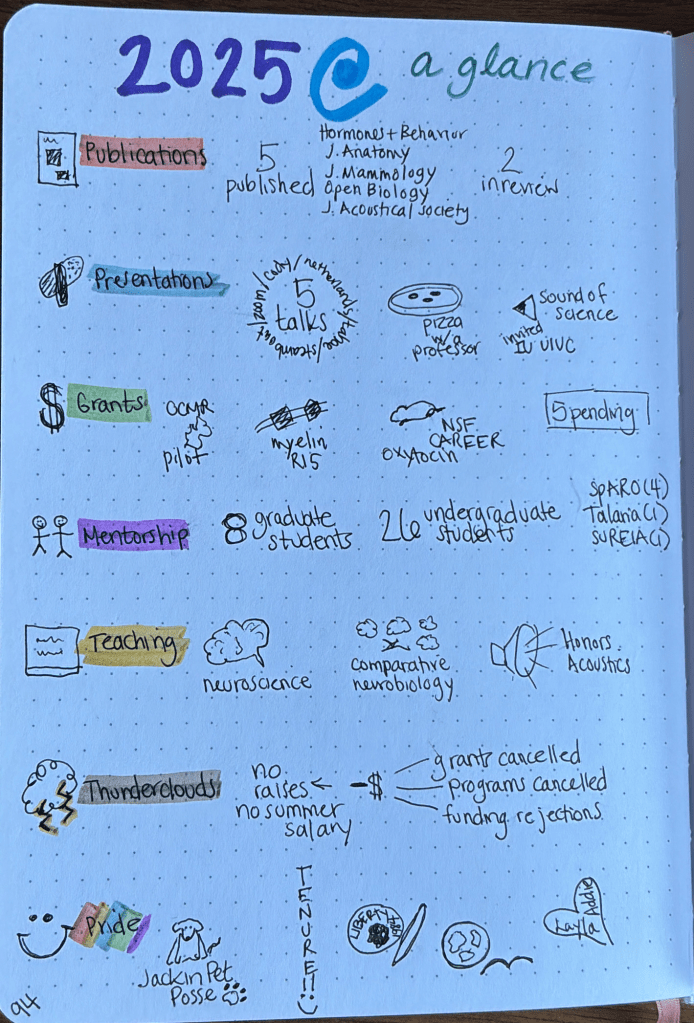
2025 recap

Wow, 2025 was a whirlwind of struggles, successes, and uncertainty. I wanted to take a moment to highlight some of the things that are more top of mind for me as we finish out this year and look forward to the next.

Publications:

While 2024 was a little light on getting things out of the lab, it wasn’t for a lack of trying, which reflected in 5! papers out of the lab in 2025.

PhD candidate Jesse Hurd published her first, first author article on her work on male prairie vole reproduction changes after pair-bonding 💜 : https://www.sciencedirect.com/science/article/pii/S0018506X25001059. This work also included contributions from collaborators Zoe Donaldson, Craig Miller, and Alexandra Ford as well as lab members Casey Sergott and Gracie Toben.

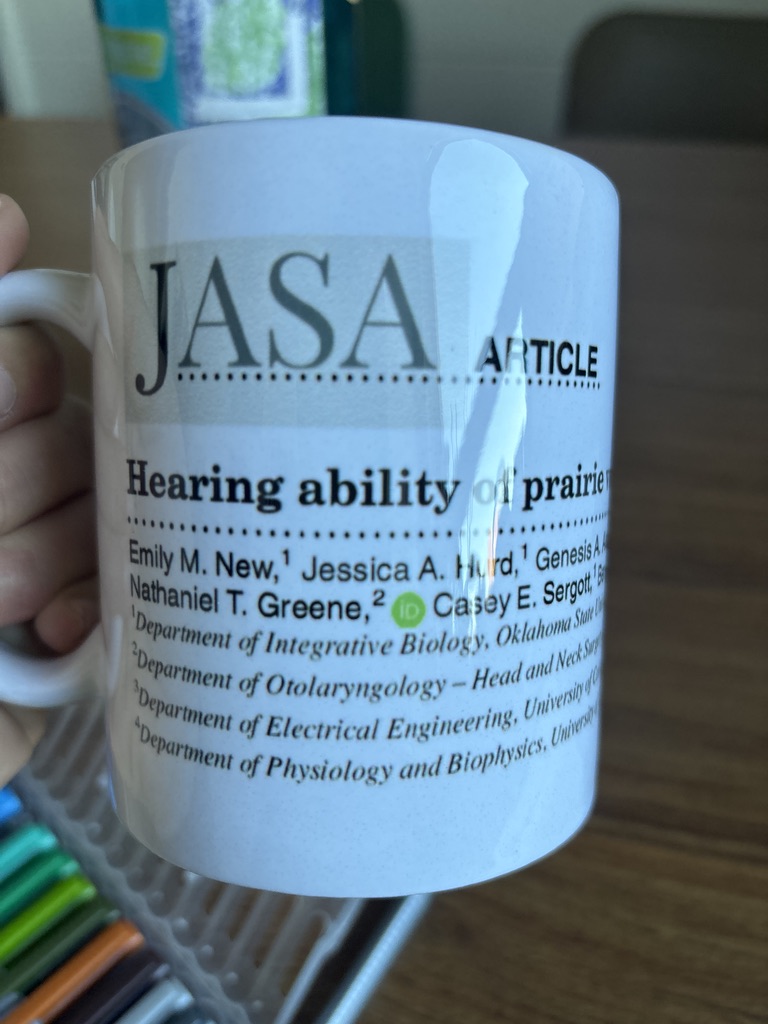
PhD candidate Luberson Joseph was super busy cranking out papers including characterizing the hearing across two closely-related Peromyscus species 🐁 https://pubs.aip.org/asa/jasa/article/157/6/4559/3350705 and sex differences in hearing 👂 in the hispid pocket mouse https://academic.oup.com/jmammal/article/106/5/1178/8240876. Importantly he also used our army of undergraduate researchers to include authorship for Sarah Hobbs, Nale Colon-Rivera, Tamara Woodley, Margaret New, and Vanessa Franco who have all helped collect wild rodents across the years.

Casey Sergott, newly PhD candidate, published her masters thesis work on using museum specimens of Peromyscus species to assess anatomical 📏 measurements of hearing https://onlinelibrary.wiley.com/doi/full/10.1111/joa.70011. Also included in contributing to this work from the lab are Luberson Joseph, Genesis Alarcon, and Katelynn Rodman.

Last but not least, collaborator Giulia Bertolin and student Claire Caron and I published our work that was funded through a small grant that allowed us to travel ✈️ to visit each other (FACE Foundation). We saw sex differences in a genetic form of autism, Fragile X Syndrome, specific to mitochondria 💥 in the auditory system that could underly differences in auditory processing.

These contributions to the scientific literature highlight the lab’s continued interest in comparative hearing approaches, interactions of hormones and physiology, and hearing in autism/Fragile X Syndrome.

Presentations

The lab traveled a lot this year to share our research, included invited talks in the Midwest (IU, UIUC) and contributing to conferences (Animal Behavior Society, ARO, WCBR, etc.) and we will continue this in 2026.

We also talked about our research locally including bringing the Sound of Science exhibit to a tailgate at OSU (more travel for the exhibit planned in 2026!, stay tuned) and coming to Kicker’s Unmasked show: https://www.youtube.com/watch?v=IxJj1IcDeuU and 🍕 Pizza with a Professor event for the Honor’s College.

Grants

We are extremely grateful for recent funding to come through to help continue to support the lab in our research including NSF CAREER award investigating oxytocin contribution to sound localization of socially relevant sounds 👋 https://www.nsf.gov/awardsearch/show-award?AWD_ID=2440070

We received a renewal of our NIH R15 award which allows us to continue our work on auditory processing in Fragile X Syndrome https://reporter.nih.gov/search/6RWqSFDFPk64pMwzSD0XpA/project-details/11125625

We received support from the OCMR https://cas.okstate.edu/microbiology_and_molecular_genetics/oklahoma_center_for_microbiome_research/ to explore microbiome alterations in Fragile X Syndrome.

This was also in the backdrop of extreme uncertainty in funding in the U.S. and non-award of a highly competitively scored NIH R01, termination of NIH-funded G-Rise which supported student Jesse Hurd as well as many other graduate students here at OSU, and termination of our postbac program ON-RaMP that supported Nale Colon-Rivera and previously supported PhD student Genesis Alarcon.

Mentorship / Shoutouts

The lab now has 8 graduate students (7 PhD, 1 MS). We welcomed Mikayla Verdin as a MS student this Spring and Gen Alarcon switching from the MS to PhD program (woot academia!). We are hoping for a few graduations in Spring 2026, so if anyone is looking for postdocs, I know of some amazing people that would be great for your lab!

Undergrad Ashlee Munoz received a McNair scholarship!

Grant Emerson got into OU medical school!

Olivia Emerson received a poster award at the Karen Smith Symposium!

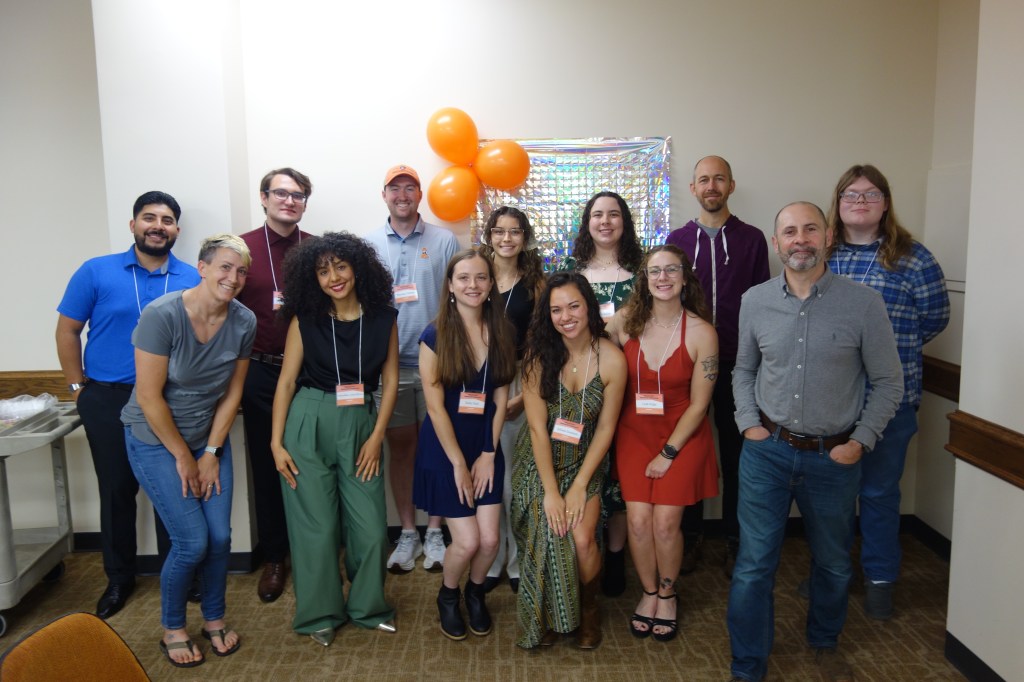
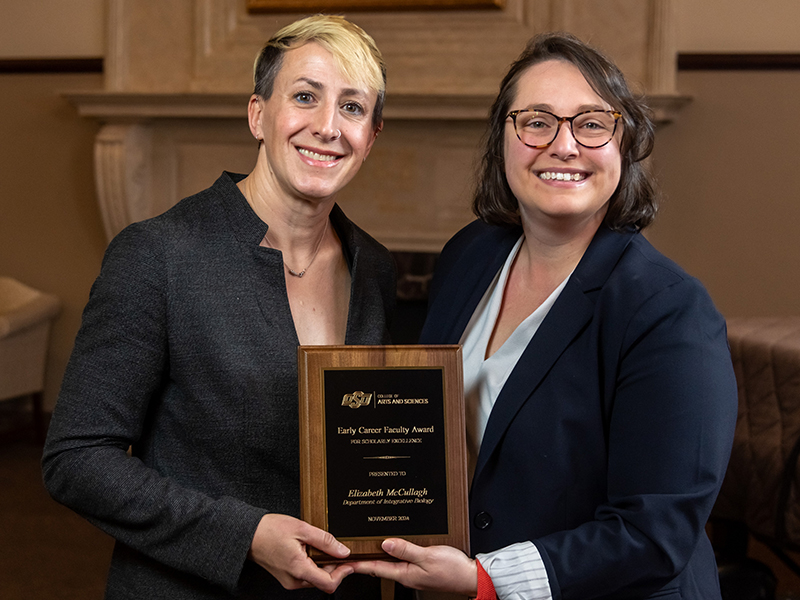
Liz received tenure this year and is now an Associate Professor as well as received the Distinguished Early Career Faculty Award from OSU.

Lucas Boren who was a recent addition to the lab in Fall 2024 graduated! He has been a great addition contributing to our anatomical studies of wild rodent brains. We are hoping he will continue to work in the lab after graduation while he prepares to apply for medical school.

Addison Browning graduated with Honors! Her project was testing audiogenic seizures (seizures that result from loud sound exposure) in our Fragile X Syndrome mouse models. Her Honors thesis was around this work and we are looking forward to her getting into medical school and becoming a doctor!

I’m sure I am missing some other important accolades, either way we are proud of everyone in the lab for their continued hard work.

Here’s to 2026 and continued work in science!!!!
2025!?!

Call to Action

Our lab, like many in the U.S., has been impacted by changes to the scientific infrastructure. We had the fortune of good funding success in the past, and recently with highly meritoriously selected grants. Unfortunately we also have had a grant terminated (see Tulsa News6, Stillwater Newspress, and Washington Post coverage). This grant would have funded a final cohort of ten people to be paid full time researchers on OSU campus – they now have to scramble to find other opportunities.

We also have several pending grants that have been delayed or likely will never be funded despite high importance and impact. We had applied for an National Institutes of Health (NIH) ReWARD R01, which is a multi-million dollar grant that would have funded our research for five years, but also connected scientists with advocates, autistics, family members, and clinical caregivers to help bridge communities impacted by autism. However, this mechanism was considered DEI and is likely permanently terminated and will never be funded leaving our funding in forever limbo. We also have two other NIH grants that have been delayed and a delayed potential NSF grant.

What does this mean? This means that we have been scrambling to keep our lab afloat this summer. We have limited funding for graduate students to 1.5 months from 3, we are reducing or eliminating costs, we are unable to pay undergraduates for their summer research time, we are struggling to pay for our animal care costs, we have delayed hiring, we have eliminated PI summer salary funding, and in general we have been stressed out!

What can you do? We are hoping our funding situation will improve in July and August, but for now – if research is valuable to you, and you want to support our lab – you can donate here to help us bridge this gap in funding – no amount is too small and all will help! See below to check out what we have been up to and what types of things your donation would help fund.

Thank you for the support!!
What have we been up to?

Graduations – we have had lots of amazing undergrads come through the lab since it started in 2020. This year we are graduating a few and we are so excited to see what they decide to do with their futures!

Preston Freeman joined the lab 2023 working with Clare Barr (fellow undergrad) on a project that was started by former undergrad Ishani Ray. Preston has been working to understand if mice with a genetic form of autism, called Fragile X Syndrome, have the same number of cells in the brain representing sounds as neurotypical mice. This is not an easy project, but Preston has been an amazing contributor in the lab and we are looking forward to seeing what he does next!

Jorja Ford joined the lab in 2023 and quickly found herself working on several different projects. She instantly took to working with Jesse on her prairie vole projects, but then it was clear that Jorja was ready for some more independence. At the same time as Jorja was ready for her own project, we started a collaboration with Dr. Ed Lucas in nutrition to examine that effects of pinto beans on Alzheimers-like phenotypes. Jorja was also awarded a Niblack scholarship to help her dedicate her time to work on this research. Jorja has been awesomely productive and presented her work last summer in the annual Nutrition conference in Chicago. We are hoping Jorja is going to find the perfect research-based opportunity for her next steps soon.

Rodney Ashaba joined the lab in Fall 2024 while taking my Principles of Neuroscience course. He has spent the last few months exploring the different projects in the lab and providing great feedback during lab meetings. This summer he will continue in the lab and help transition into Preston’s project.

Roland Ngom joined the lab in Fall 2024 also due to my Principles of Neuroscience class. He quickly excelled in taking on his own project and is currently working through the summer to establish a mouse line in the lab that allows for selective highlighting of specific auditory cell in the brain.

Morgan Scott joined the lab in Fall 2024 as a part of the Principles of Neuroscience cohort like Roland and Rodney above. She has been working with Lu to examine differences in neural circuits in the brain across the wild rodent species he collects in the field.

Eden Rutledge joined the lab for a short project in the Fall of 2024 to complete her Honors thesis graduating in December 2024. She focused on whether different startling sounds, like ambulance sirens – which is super relevant for her since she is an EMT – make mice more or less responsive.

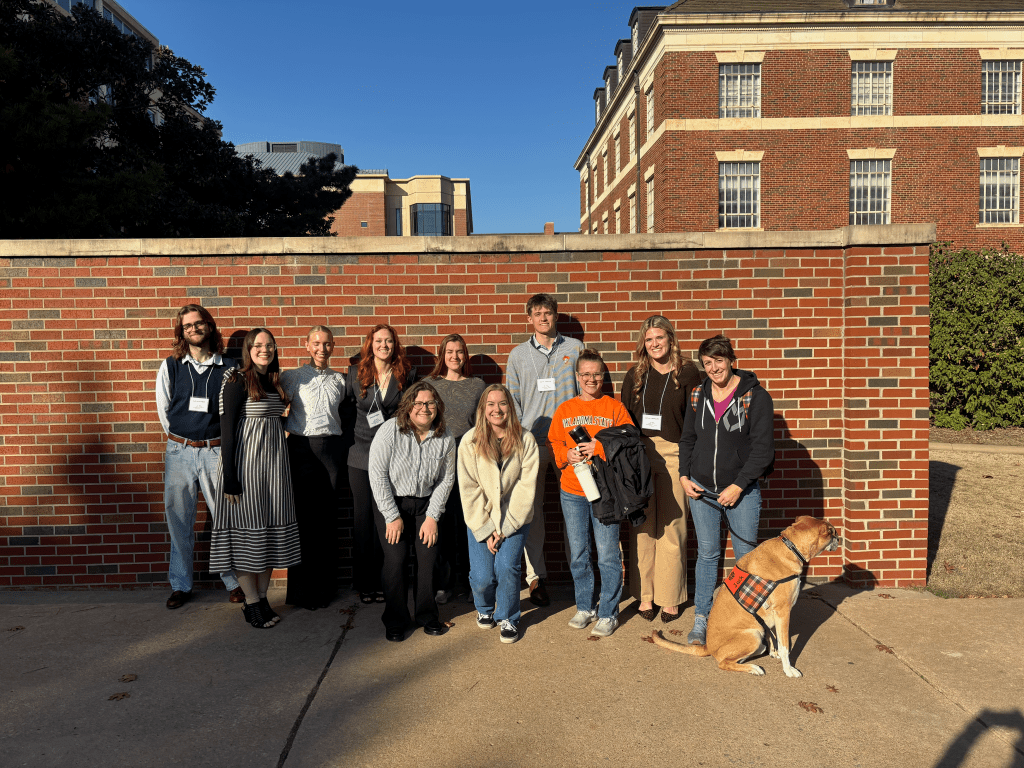
ON-RaMP – we had the pleasure of finishing out our second cohort of the National Science Foundation (NSF) funded RaMP program here at OSU in 2024-2025. This year we got to include the amazing Naleyshka (Nale) Colon-Rivera into the lab. She had lots of different projects, from braving the Oklahoma and Kansas wilderness with Lu to collect wild rodents to understand hearing across species (which will hopefully be coming out in publication on the hispid pocket mouse in the next few months) to working with our autistic Fragile X Syndrome mice. She presented the capstone of her project at the final ON-RaMP symposium along with the nine other postbacs who spent time in OSU labs this past year (see picture). We were just about to welcome our last cohort of ten graduates to spend a paid year in the lab gaining research skills when our grant was abruptly canceled. This is a real travesty for American science and ends an awesome program that had a great impact across the years we were active.

Science Outreach – One of the passions of the lab is to share our science with the general public. To this end:

  • Liz got to go on a podcast “The Odd Fellows” to talk with Dr. Skye Cooley and Dr. Andrew Abernathy to talk about the research in the lab.
  • OSU featured Liz in their monthly “Research on Tap” series at Iron Monk – you can catch the recording here.
  • The Honors Acoustics class was featured on Kicker Unmasked, where we talk about Liz’s research but also what the class got to do in Fall semester – this is a really fun class – highly recommend if you are interested in Acoustics, co-taught by the awesome Aaron Surratt of Kicker.

Awards – The McCullagh lab was honored to receive several awards this year:

  • Sabiha Alam received the Integrative Biology Outstanding PhD Student award
  • Genesis Alarcon received the Integrative Biology Outstanding Masters Student award
  • Andi Gensky received the Wilm Graduate Student Travel Award
  • Amita Chawla received the Wilm Graduate Student Travel Award
  • Olivia Emerson received the Niblack scholarship and Lyle Family Scholarship
  • Grant Emerson received 2nd place in the Spring Karen Smith Symposium poster presentation and the Dr. G Michael Steelman Endowed Scholarship
  • Eden Rutledge won 3rd place in the Fall Karen Smith Symposium
  • Liz McCullagh received the College of Arts & Sciences Early Career Faculty Award for Scholarly Excellence and the Excellence in Research Mentoring Award

Miscellaneous – we had lots of other fun comings and goings this year:

  • Liz and collaborator Giulia Bertolin, through their FACE Foundation funding, published a paper showing sex-specific differences in mitochondria (the powerhouse of the cell!) in our FXS mice. Check it out in Open Biology here.
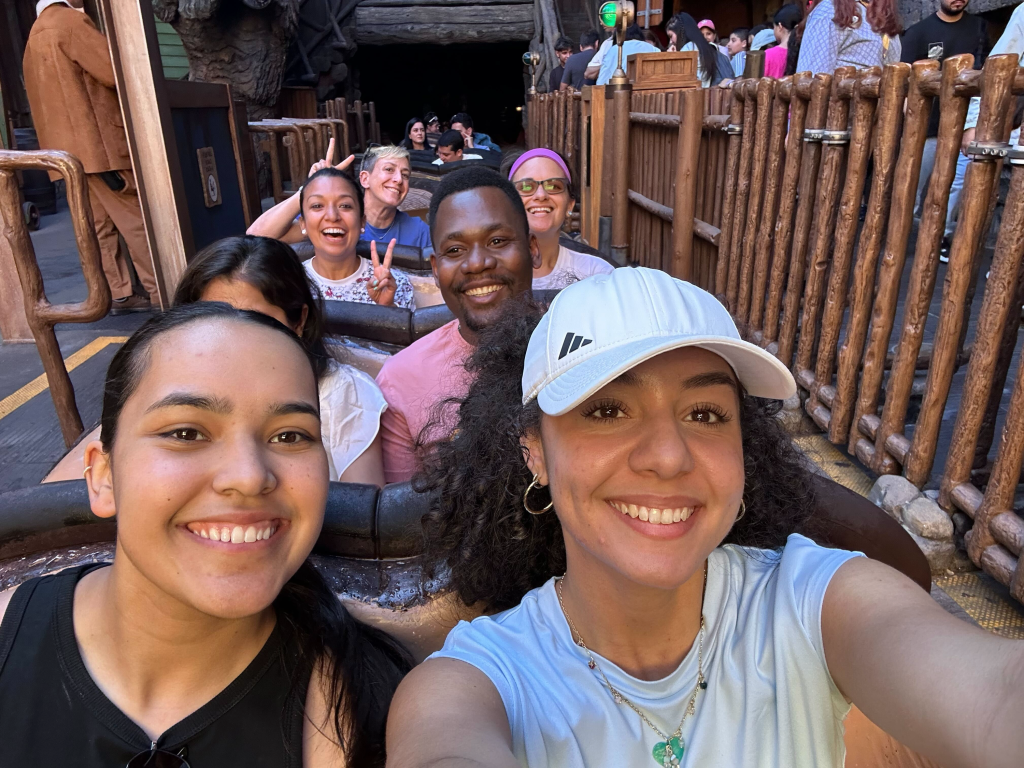
  • A bunch of the lab (see photos above) traveled to the Association for Research in Otolaryngology (ARO) annual conference in Orlando, FL where we presented our research in both contributed talks (Luberson Joseph and Amita Chawla) and poster sessions (Genesis Alarcon, Andi Gensky, and Nale Colon-Rivera (her first poster ever!)). We also had some fun traveling to Disney World Magic Kingdom – thanks Crystall Aeppli Samano and Wendy Aeppli Samano for showing us around and getting us discounts!
  • Liz gave a talk at both the winter Animal Behavior Conference in Steamboat Springs, Colorado and a panel at the Winter Conference on Brain Research, with Sabiha Alam presenting a poster in Tahoe, California.
  • Undergrads have been presenting a ton on campus! In the winter Karen Smith Symposium we had 9 of 15 presenters from the McCullagh lab including Addison Browning, Anastacia Simmons, Julie Luper, Agustin Delgado, Ashlee Munoz, Grant Emerson, Olivia Emerson, Preston Freeman, and Eden Rutledge, In the Spring Karen Smith Symposium we had 12 of 32 presenters from the McCullagh lab with presentations from Grant Emerson, Olivia Emerson, Preston Freeman, Emillia Hubbard, Gracie Toben, Caden Miller, Ashlee Munoz, Agustin Delgado, Roland Ngom, Anastacia Simmons, Addison Browning, and Julie Luper. Grant Emerson also presented his work at the Wentz Symposium, Sydney Cuttler and Laci Wright presented at the Freshman Research Scholar Symposium, and Olivia Emerson, Jorja Ford, Addison Browning, Anastacia Simmons, and Julie Luper presented at the Undergraduate Research Symposium.

What’s Next? Hopefully funding will come through sooner rather than later so that we continue our important research! We also have several events and exciting things happening this summer.

  • Casey Sergott and Jesse Hurd are traveling to Baltimore to give talks at the Annual Animal Behavior Conference in July.
  • We are being joined this summer by Tayres Bluett as a part of the SUREIA program through the Acoustical Society of America (ASA) to gain some experience in the lab in acoustics – welcome Tayres, we are excited to have you!
  • We have several other papers in the works that we hope will come out soon – you can check out the preprints in the meantime here:

College of Arts & Sciences feature on Sound of Science Exhibit

The Oklahoma State University College of Arts & Sciences did a great feature on the Sound of Science exhibit (supported by a Community Engagement Grant from CAS to get us going). We presented the exhibit for the first time at the NAISEF, Native American Indian Science and Engineering Fair, in the Spring and they came and interviewed us about. We are hoping to get this exhibit going again later in the Fall and Spring to bring it on the road to schools and tradeshows if we receive additional funding. Big thanks also to Stillwater Designs (Kicker) for their endless support and making my dream a reality!

Here is a link to the feature: https://casinfo.okstate.edu/images/ePubs/CONNECT2024/24/index.html

And there’s a video interview portion here: https://www.youtube.com/shorts/xJj5GSpdGM4

Thanks for the feature! See other blog posts to see more about the exhibit!

2023-2024 update and summer 2024

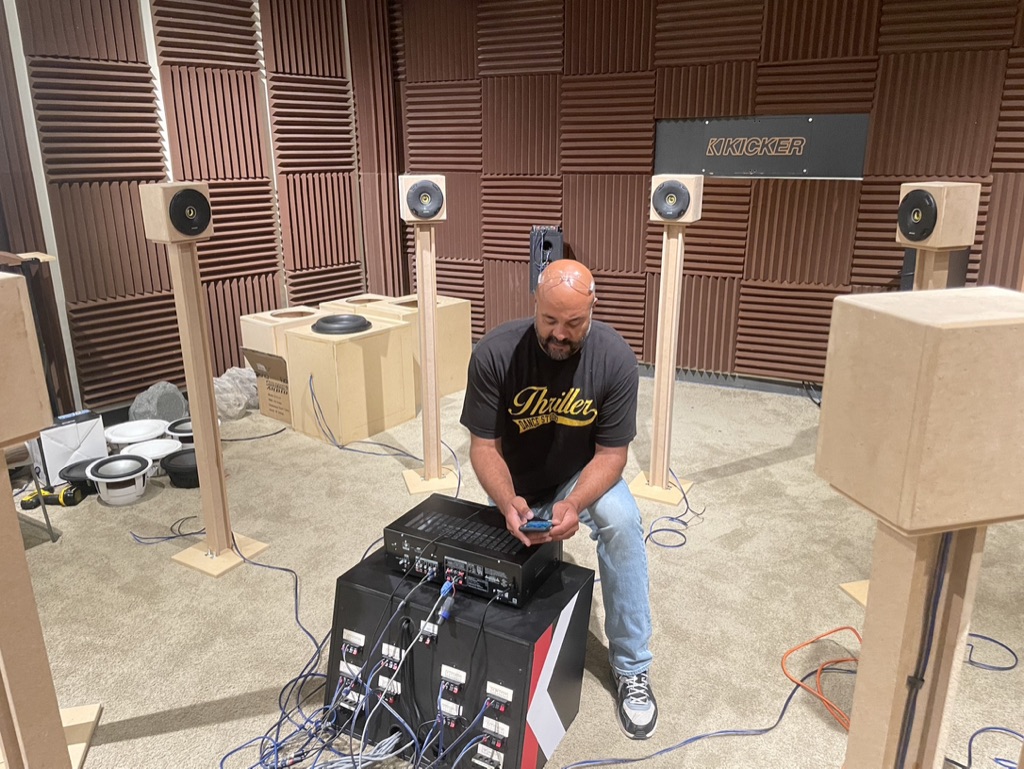
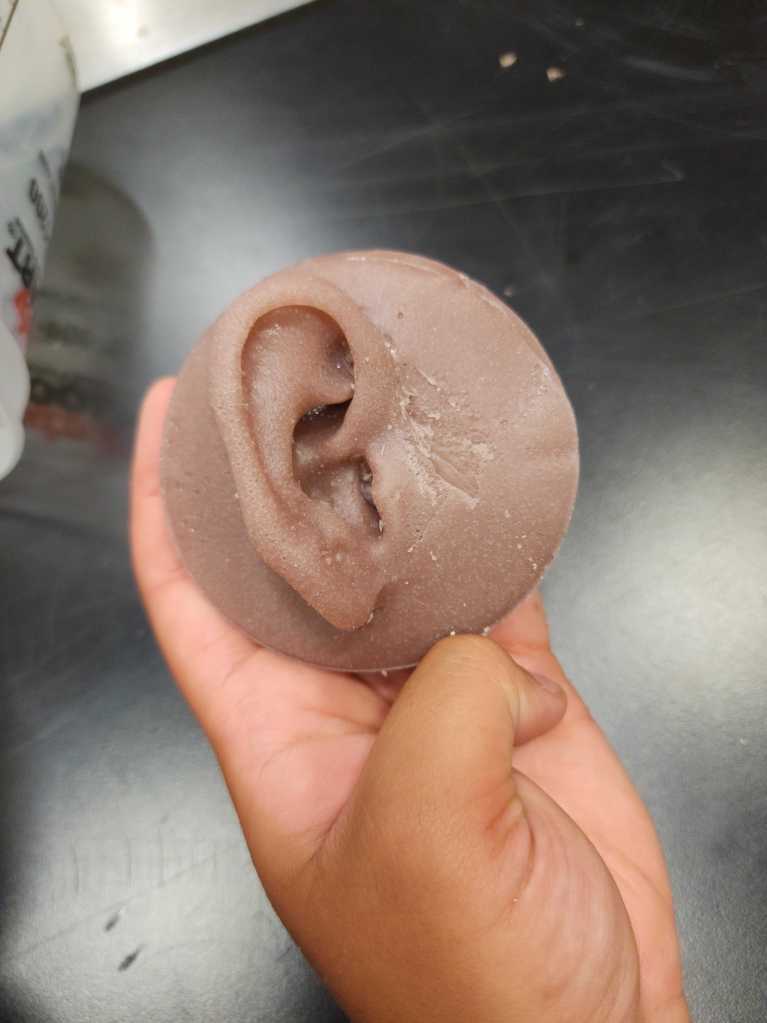
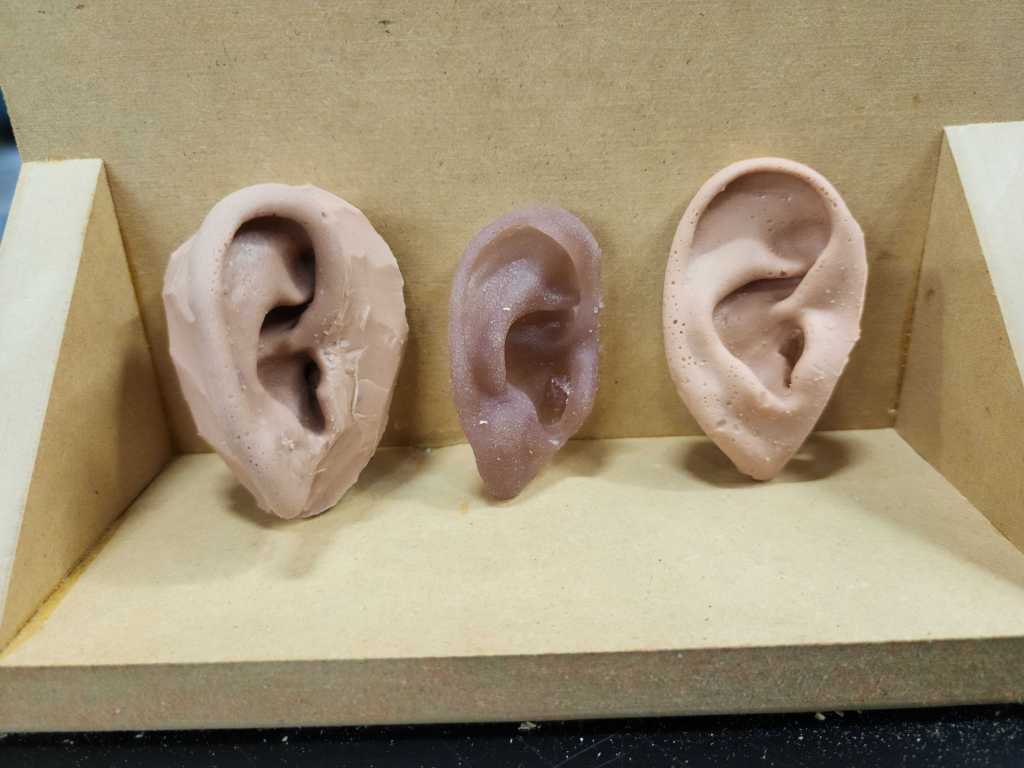
Kicker helped us make an head-related transfer function (HRTF) set up to measure the impact of pinna (ears) and head size on hearing in small rodents. This ended up being a side project of the Sound of Science exhibit (see below). Pictured are Cameron, Peyton, and Gen.
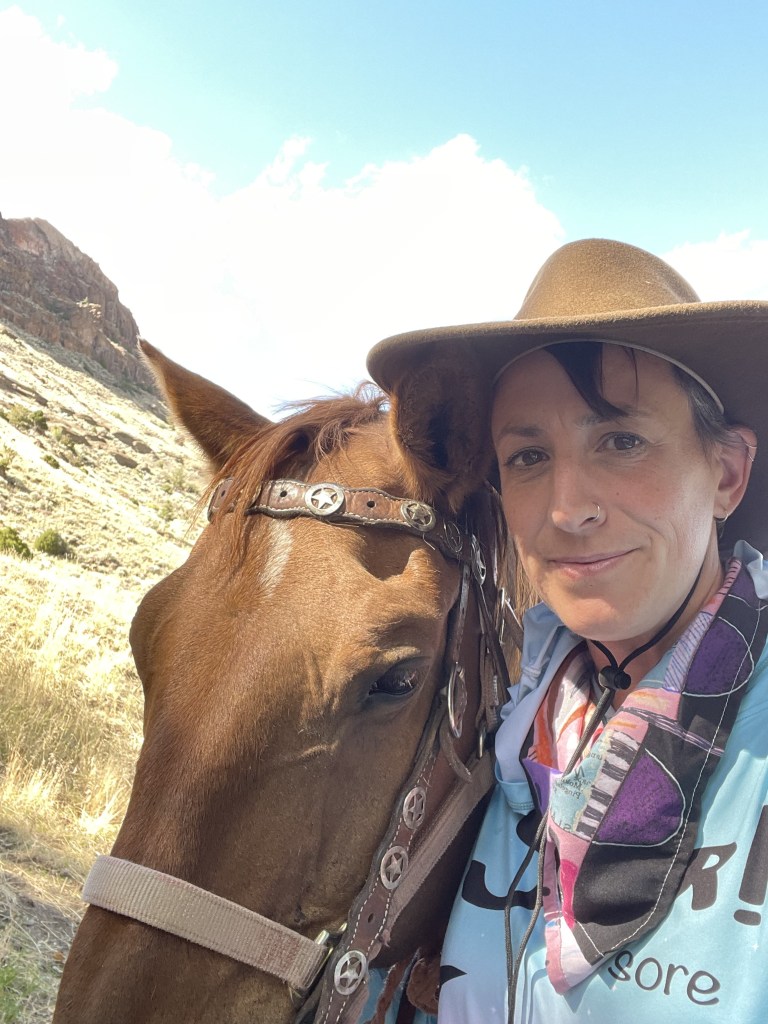
I got to present our science at the Auditory Dude Ranch conference in Cody, WY. Thanks Laurel Carney for the invite and thanks Peso for being a great horse for the week. Also tried to learn to lasso, but we won’t show those pictures haha.

McCullagh lab at the Winter Karen L Smith undergraduate research symposium. Included are Bodhi, Luberson, Preston, Jesse, Cameron, Gracie, Sabiha, Margaret, Clare, Jesse, Madison, me, Gen, Rachel, and Anya. Bodhi got first place for his poster, and Tamara (not pictured) got third place!

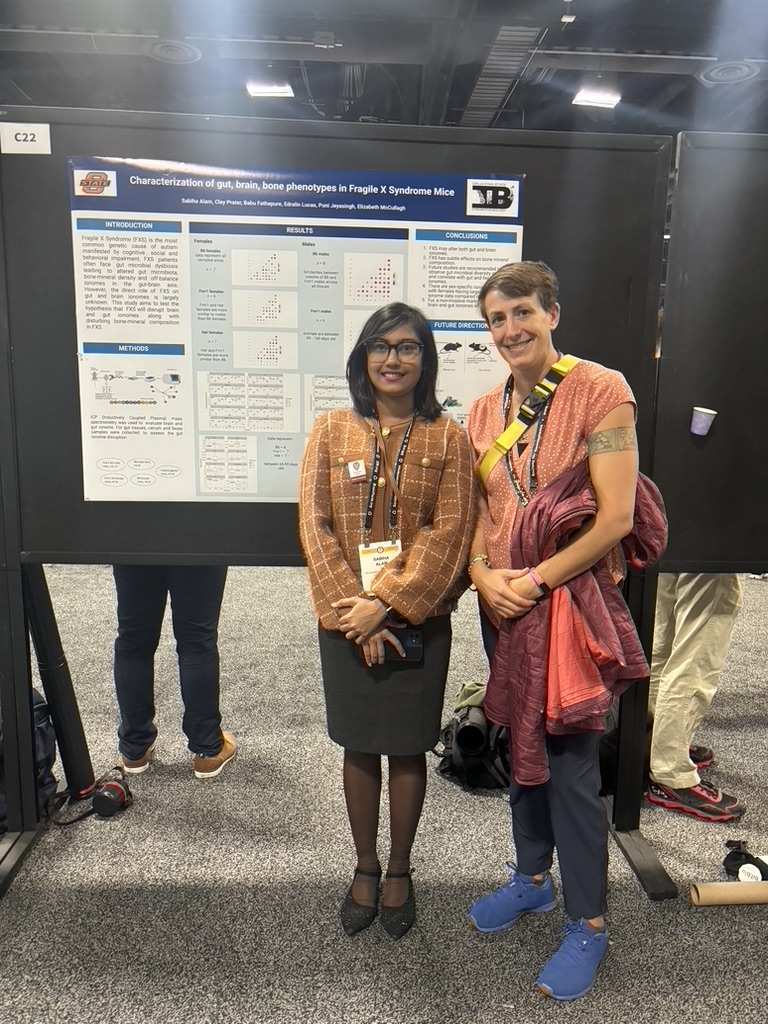
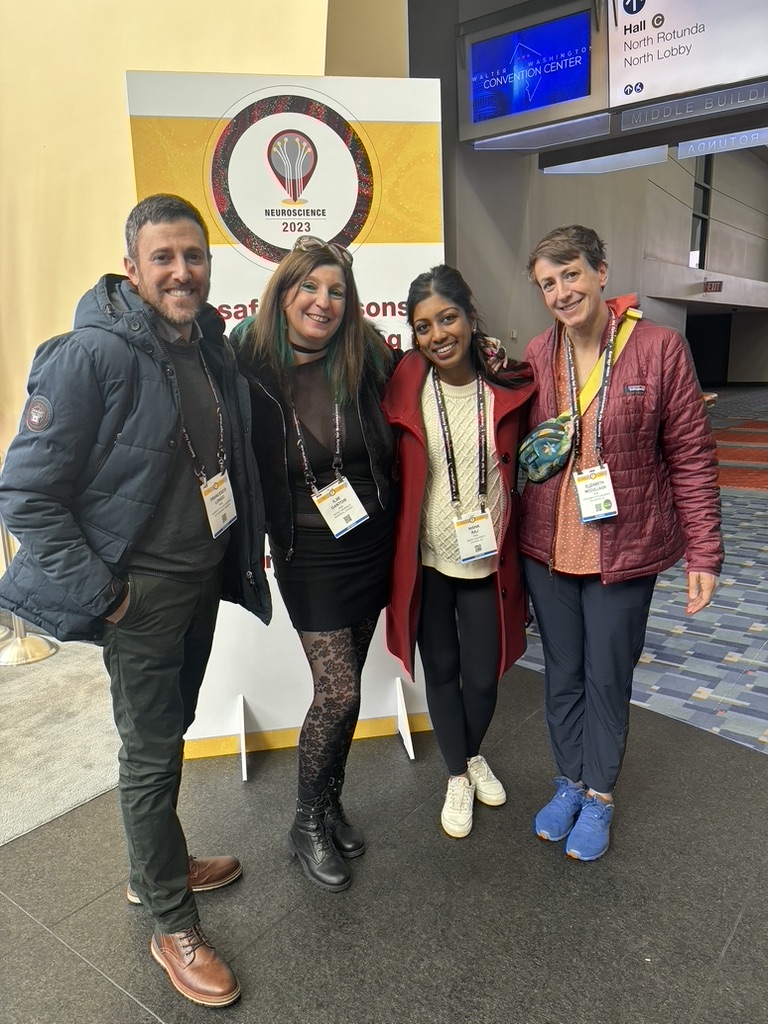
We went to Society for Neuroscience in Washington D.C. where Sabiha (left picture) presented her poster on elemental alterations in Fragile X Syndrome across tissue types. Also got to present our work on myelination at a minisymposium organized by the amazing Ilse Gantois (right picture Francesco Longo, Ilse Gantois, Nisha Raj, me).

We finally got our first paper on prairie voles out of the lab! Spearheaded in the early days by undergraduate researcher Margaret New (who graduated and is hopefully going to crush PA school in the future). Support from many folks in the lab including Jesse, Gen, Peyton, Cameron, and Casey. Not to leave out folks at CU Anschutz/Denver including Nate Greene, Tim Lei and Ben-zheng Li. Check out the full paper here – https://pubs.aip.org/asa/jasa/article/155/1/555/3061584/Hearing-ability-of-prairie-voles-Microtus

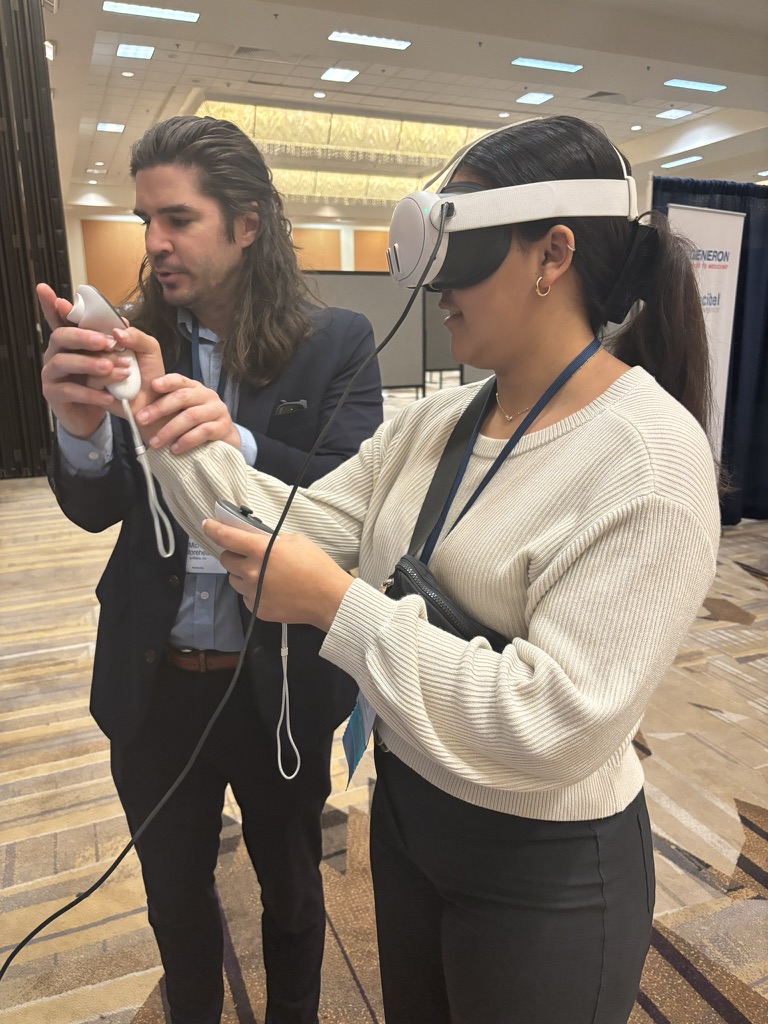
Fabio Machado and I received a tech grant from the College of Arts & Sciences allowing us to get some Syglass (https://www.syglass.io/) systems for the lab and our courses (Mammology and Neuroscience). Left picture is Michael Morehead of Syglass and Gen demoing the system at the Association for Research in Otolaryngology. Right picture is Fabio Machado trying it out in my office for the first time.

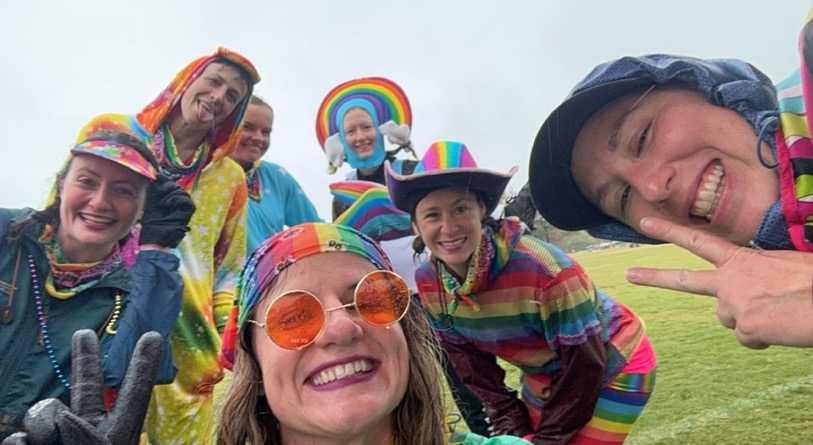
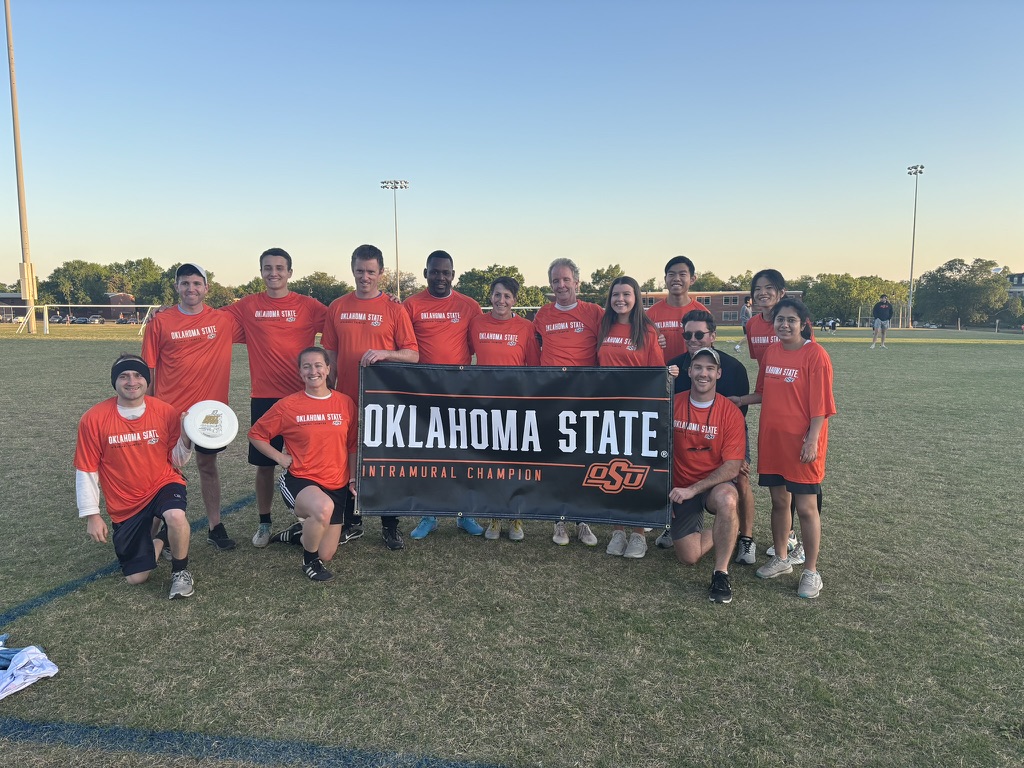
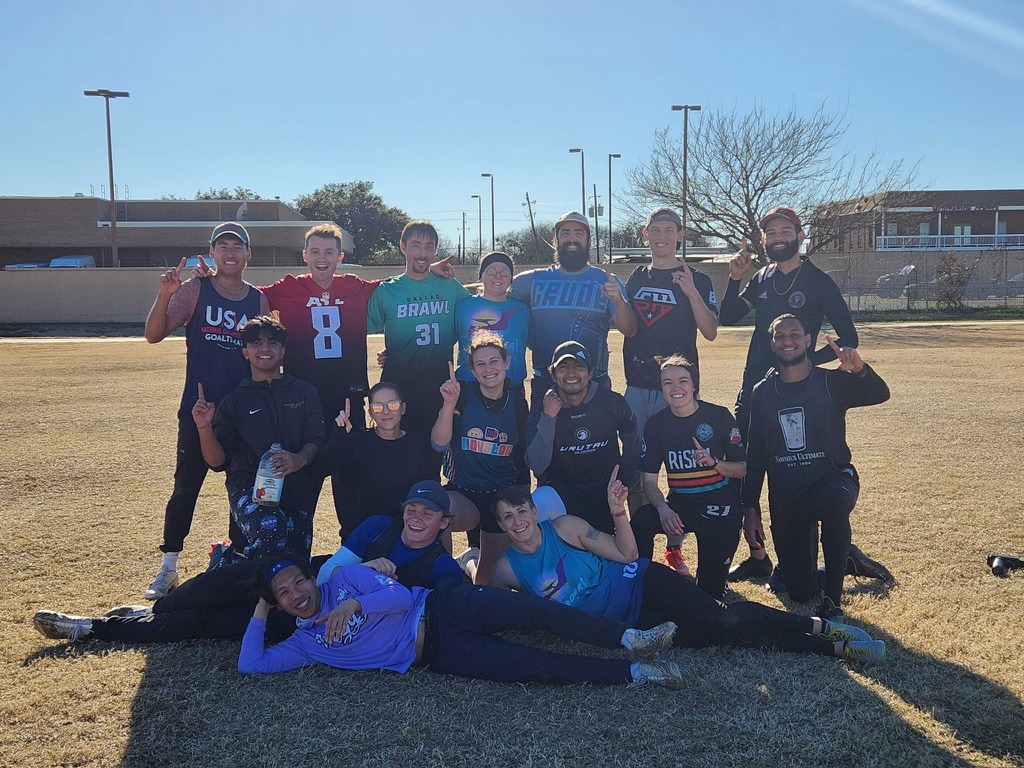
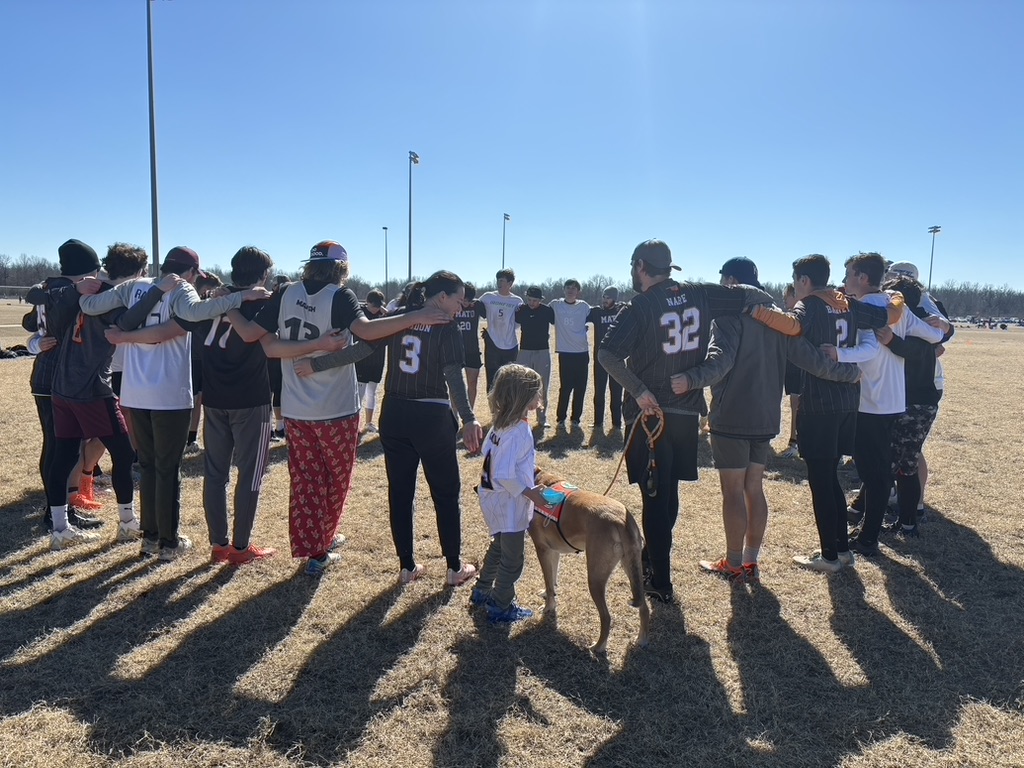
Ultimate frisbee was still very much present with Hayride ultimate (https://x.com/HayrideUltimate) winning the Harvest Moon festival in Fayetteville (theme Gayride – top left pic). Folks from the Integrative Biology Department banded with me to play intramurals, which we won (middle top pic). For New Years also won a hat tournament hosted by Masters team Soar*sore (who also came in 2nd at Masters Nationals in 2023) https://x.com/Soar_dfw. Last but not least, coached Ultimato (https://x.com/okstateultimato) which met our goal of making regionals and winning a game (even if it was an unsanctioned rain out). Thanks to co-coaches (Layla, Addie, and Ciaran Shaughnessy).

We made lab pumpkins in the Fall!

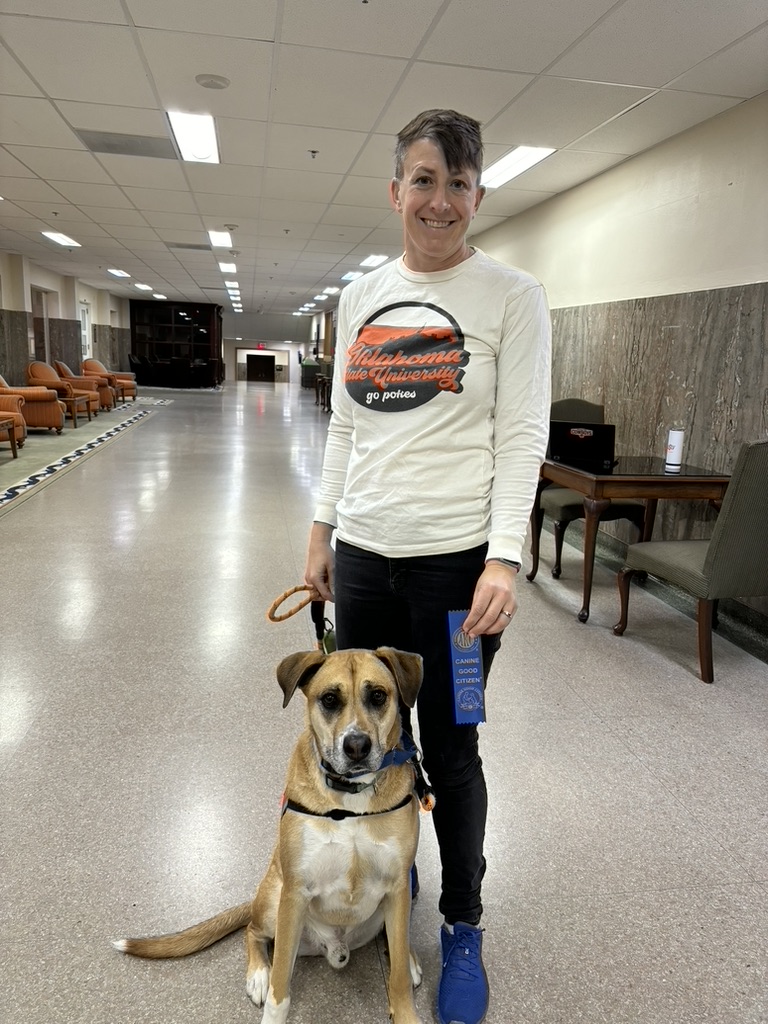
The best doggo Jack is joining Pete’s Pet Posse for Class 11 to be a therapy dog at OSU. Here is a pic of him passing his Canine Good Citizen test with flying colors (https://hr.okstate.edu/pet-therapy/)

Members of the McCullagh lab presented at the Midwinter meeting of the Association for Research in Otolaryngology. Casey gave an amazing talk on pinna representing the lab well (left pic), Andi and Gen had their first conference posters, and Amita got to check out ARO for the first time.

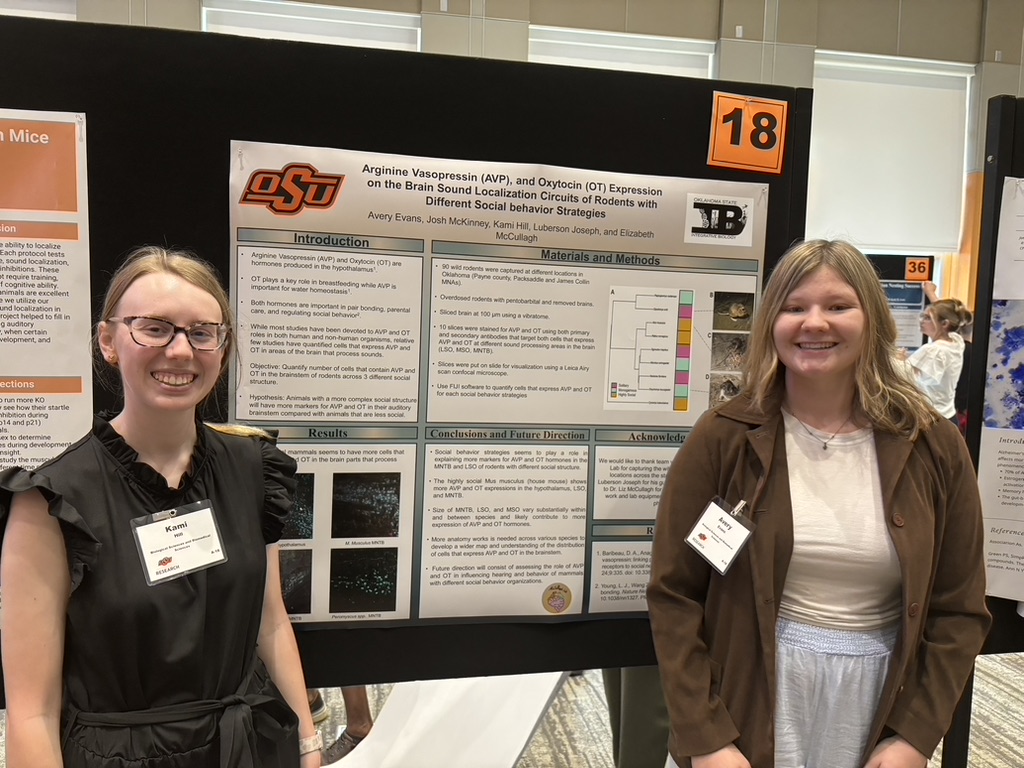
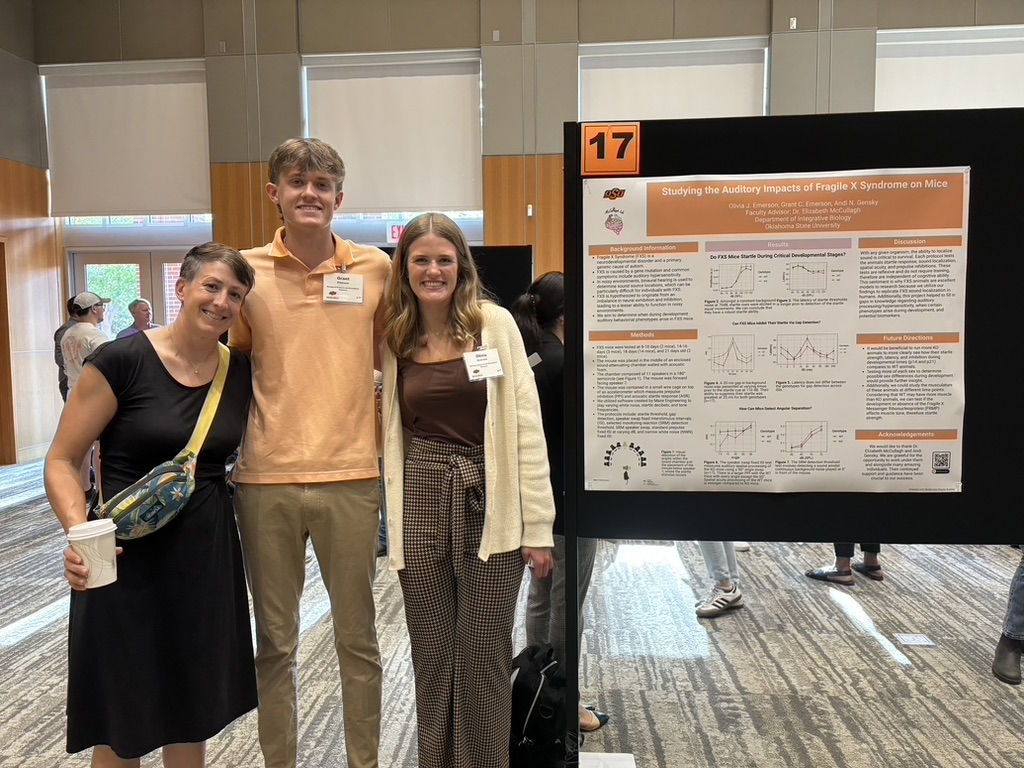
The McCullagh lab was represented well at the Undergraduate research symposium! Jorja (left) also presented at the Human Performance and Nutrition Research Institute and got a poster prize as well as receiving a Niblack scholarship this year on her work on Alzheimers and estrogen deficiency in collaboration with Ed Lucas. Avery and Kami (middle picture) presented their work on hormonal expression in the auditory brainstem of wild rodent species (not picture Josh who is also working on this project). Grant and Olivia Emerson presented their work on Fragile X Syndrome mouse auditory behavioral development (right picture). Grant also received a Wentz fellowship this year.

McCullagh lab members received several awards at the Integrative Biology end of year banquet including Olivia and Grant Emerson, Casey, Sabiha, and Lu.

We had the opportunity to start to build and exhibit the Sound of Science in collaboration with Kicker and Aaron Surratt (check out our Honors course on sound offered this Fall). Peyton and Cameron spent the summer building the system and now we are starting to show it off with the first stop which was the Native American Indian Science and Engineering Fair in the Spring. Stay tuned for media from that event. Also check out when Peyton and Cameron went on Kicker’s Unmasked to talk about the exhibit: https://www.youtube.com/watch?v=ZDN28LHxXDU

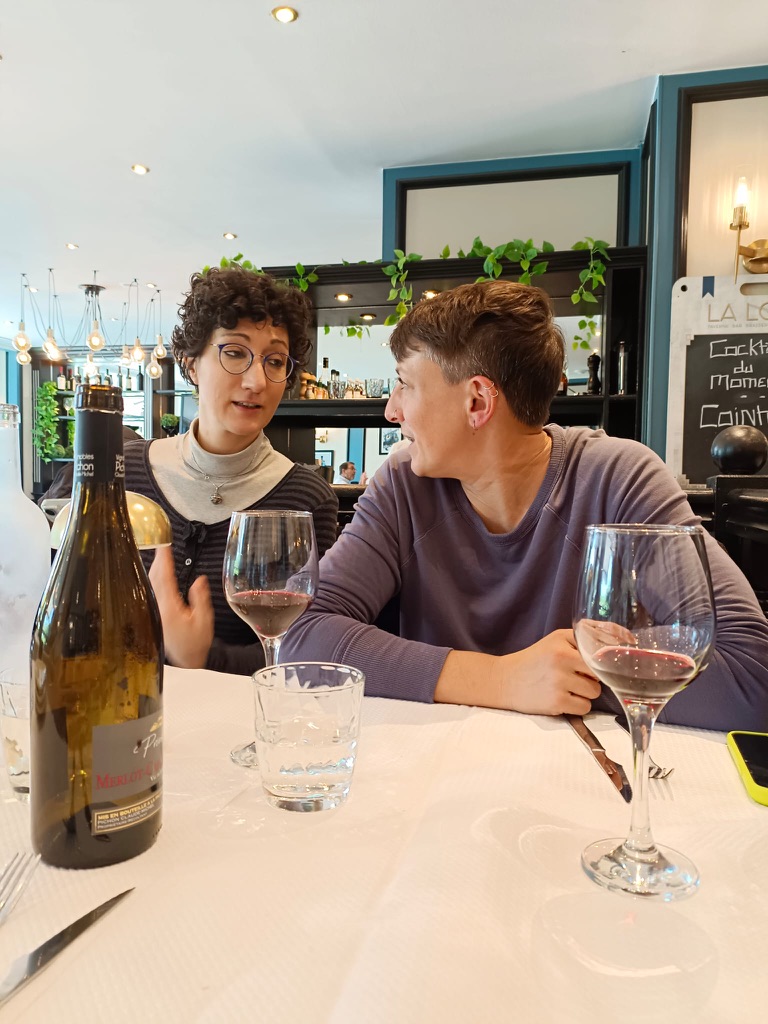
Got to go to Rennes and hang out with Giulia Bertolin so we could talk about our collaborative project on Fragile X Syndrome and mitochondria (preprint coming soon!). Was a very productive time despite all the wine pictures where we worked on a manuscript and brainstormed some ideas for grant proposals.

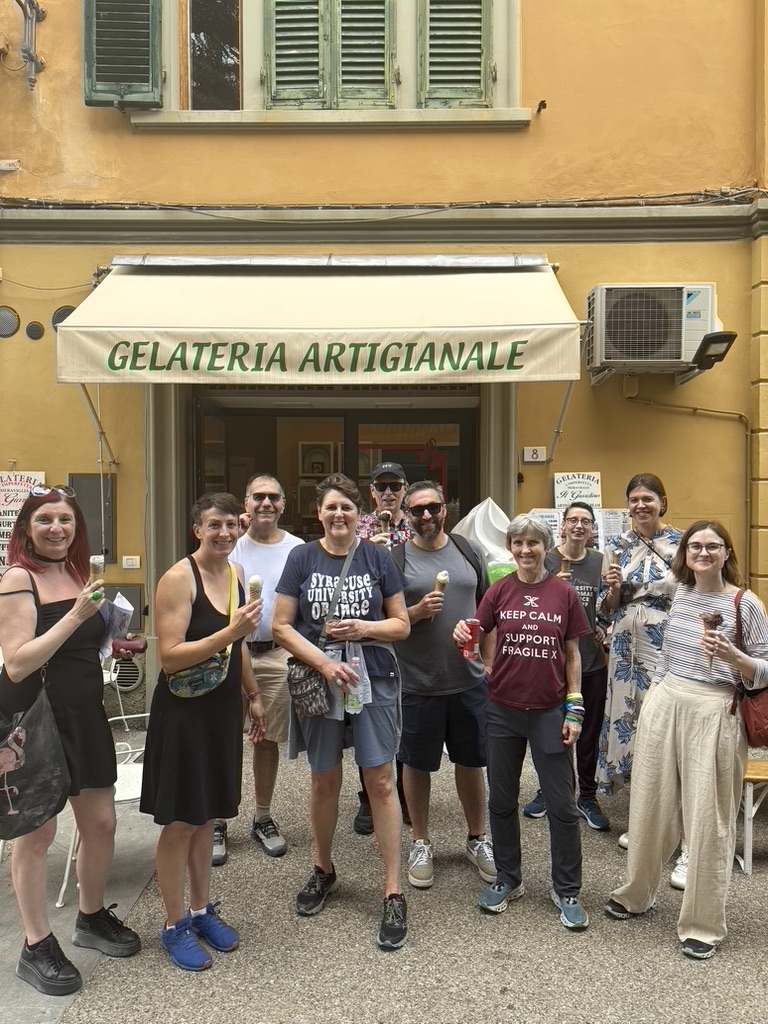
Had an amazing time talking science with super smart researchers on Fragile X and Autism at the Gordon Research Conference chaired by Kim Huber, who did a fantastic job at organizing one of my favorite conferences of my career. Was honored to co-chair the Power Hour with Melanie Brandabur of Ultragenyx where we discussed mentorship and imposter syndrome with our colleagues (photo on left). Also always a great trip to Barga to get some gelato.

Other notable lab happenings – just no pictures:

-Luberson received the Payne County Audubon Society Award to continue his work on wild rodent hearing, particularly in the context of human generated sound pollution.

-Gen is “graduating” as our first ON-RaMP technician and will be joining the lab in Fall 2024 as an MS student!

-Casey walked for her MS (will be defending in July) and will be joining the lab for her PhD in Fall 2024.

-Undergraduate students who are graduating include Josh Mckinney (wild rodent anatomy), Clare Barr (tonotopic hearing in FXS), Margaret New (everything wild rodent), Bodhi Hale (wild rodent hearing), Katelynn Rodman (HRTFs and pinna), Vanessa Franco (oligodendrocytes in FXS), and Madison Merideth (oligodendrocytes in FXS). We are so proud of all of you and know that you are going to go on and do amazing things!

-We are welcoming several new folks to the lab for the summer including Naleyshka Colon-Rivera (ON-RaMP 2024-2025), Sarah Hobbs (visiting undergrad from Connecticut), and Kate Watts (SRTP vet student). Also new undergraduates Anastacia Simmons and Julie Luper.

Sound of Science Update

This summer, Dr. McCullagh’s Lab partnered with Kicker to bring the Sound of Science to schools and the public to learn about how sound works. Both Cameron Miller and I, Peyton Williams, were hired to design and build exhibits to stimulate excitement for science and to show how sound is created, displayed, and perceived by the brain. Of all the projects we built, our two favorites included the sound localization project and building a Kundt’s tube display.  For the sound localization design, an array of eight speakers were arranged in a circle with a switcher board located in the middle. This display will show viewers how sound is obtained by the human ear and how it is important to be in the right location to hear certain sounds. For the Kundt’s tube display, we wanted to show how a sound wave is created. We used an acrylic tube, filled it with small Styrofoam balls and built two caps for the ends, where one side had a speaker, and the other end was completely closed off. When the speaker is played, it shows how the different sound waves are created by different frequencies. If you are interested in taking a closer look and hearing more about the project, we presented a YouTube with Kicker’s Unmasked Live Show https://www.youtube.com/watch?v=lbRK9Ostbp4, to demonstrate all that has been built so far and how each display works. Overall, Cameron and I have had a great time working with Aaron Surrat from Kicker.  The project provided an awesome learning experience for both of us.

Paid position to help design interactive museum exhibit in collaboration with Kicker

Sound production and reception are accessible topics for people to gain an interest in science, technology, engineering, and math (STEM) fields through its interdisciplinary nature (engineering, neuroscience, math, biology, etc.) and relatable features (sound waves, personal experience with sound). With the overall goal of stimulating excitement for STEM in people across ages, we are developing a mobile exhibit featuring sound production and reception in partnership with local speaker company, Kicker. Kicker will bring the display to festivals where they are presenting their company to bring science to the public where they are, rather than folks having to come to science spaces. The exhibit will also travel to local schools and be designed and tested on campus at OSU. We are creating an industry and academic partnership through design of the exhibit which will be a collaboration between an OSU undergraduate intern working both with Dr. McCullagh and the staff at Kicker. This project will lead to a broad impact, directly benefiting career and professional development for people at OSU designing the project, the OSU community that gets to learn as they interact with the exhibit, local Oklahoma schools, and the broader general public. This proposal exemplifies community engagement by partnering academia with local industry to directly impact local communities within Oklahoma and across the United States.

Primary objectives:

  • Bring science to the public through tradeshows, school interaction, and OSU campus deployment
  • Provide public-private experience for students working on the project and hands-on training relevant to multiple career paths
  • Stimulate excitement for science in those interacting with the exhibit across ages

The position:

-Looking for an highly motivated undergrad interested in science communication/education and a strong interest or background in Biology/Physics/Neuroscience

-Hourly position for 20 hours per week split between time at Kicker, engaging stakeholders, and the McCullagh lab

-Start July 1st through August 18th at $17 / hr

-Preferred qualifications include ability to work with tools, communication skills, organized, motivated, and commitment to the project

For consideration send your CV/resume and short (500 words or less) statement of interest to Liz McCullagh (elizabeth.mccullagh@okstate.edu) by 5/31

The annual Spring lab comings and goings

Congratulations graduating seniors!

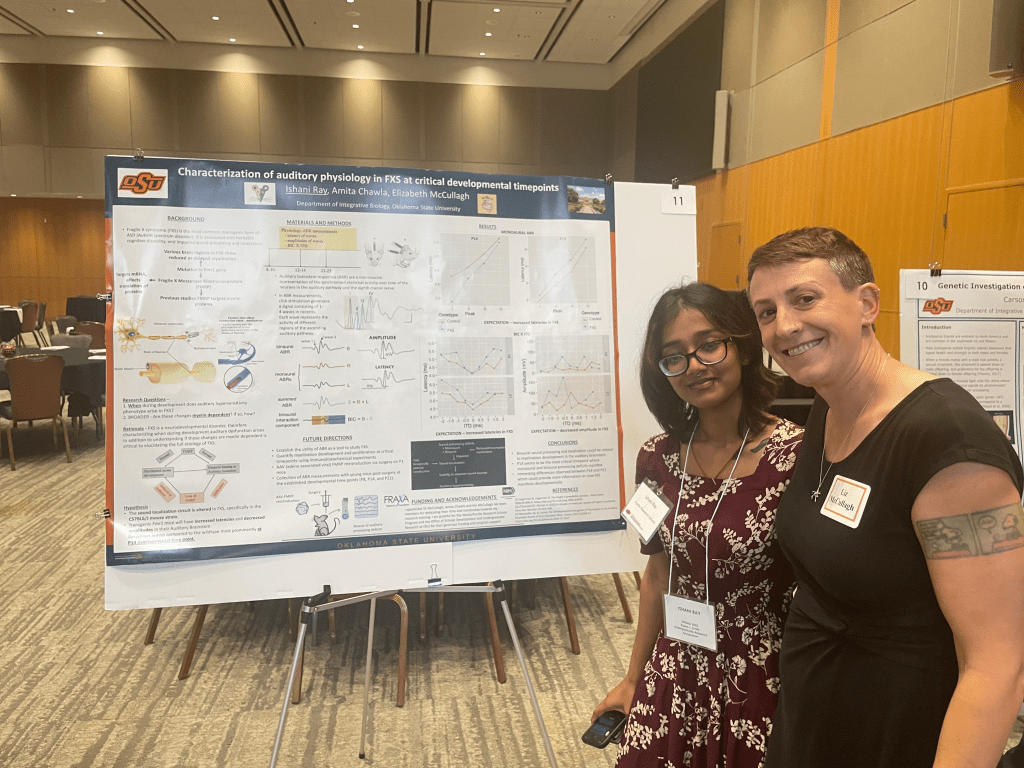
Ishani Ray joined the McCullagh lab in Spring 2021 as a sophomore and quickly started working with Team Mouse and graduate student Amita Chawla on her Ph.D. project. She has been a great asset to the lab and her colleagues and recently took on her own independent project. During her tenure in the lab, she received the prestigious Purdie Scholarship to fund her research, has presented her work at many conferences including but not limited to NCUR and Learning & Memory, and received travel funding to offset her travel costs. We are excited to see what Ishani is going to do next, and I’m glad to hear that her future will likely involve doing research in some capacity.

McKenleigh Kelly joined the McCullagh lab in August 2022. Even though she has not been in the lab very long, she has brought immeasurable qualities to the lab. She is patient and kind always willing to help wherever she can even volunteering to take notes for Team Mouse meetings and disseminating them to everyone. She is always a positive presence in the lab and genuinely excited about whatever task you give her. We wish we had more time in the lab with you, and know that you also are going to go on and do amazing things with your degree in Communication Sciences.

Kaitlyn Welker (left) joined the lab in Spring 2021 where she quickly became one of the biggest supporters of Team Frog. Kaitlyn is an excellent researcher and has taken on many projects independently, especially as Team Frog members have dwindled, she has kept it alive. We has worked on many different projects in the lab involving frogs and her work on helping create a tree frog brain atlas, tree frog ABRs, and tree frog histology have been invaluable contributions. She has also been a delight at lab meetings pushing against outlandish ideas and offering some of her own. It has been incredible to watch her grow as a scientist and we are excited for her future in Australia pursuing her master’s degree.

Elizabeth Farmer is another Team Frog member that joined the lab in Fall 2021. She has been a great contribution to the lab collecting and analyzing parasitized green frog ABRs and helping with analyses of tree frog ABRs. She also won the Karen L Smith poster presentation award for her work on green frogs. We are excited to see what she will do next and I know her interests in microbiology will serve her well and hopefully she will get into a great masters program to continue her research aspirations.

Madeline Loosen joined the McCullagh lab in Fall 2021. She is a physiology major with aspirations for medical school. We think she is highly deserving of this future career and she received the Dr. Raymond Dixon Scholarship in rural health last year. She has been a tireless worker in the lab performing immunofluorescence (IF) experiments on prairie vole brains. She has taught at least half the lab how to perform brain slicing experiments and IF. We know that whatever she does in the future she will succeed.

We really enjoy the time we get with our undergraduates, they really do make up the heart of the lab. While often their time in lab is too short, we are really lucky to get to work with them as they grow into independent researchers. This year we are losing 5 awesome undergraduates to their degrees, but I am so excited for each of them and I know they are going to go on and do amazing things.

Awards

Members of the McCullagh lab received several awards this Spring.

Vanessa Franco was awarded a Wentz scholarship for Fall 2023-Spring 2024 and presented her work at the Society for Integrative Biology (SICB) in Austin, TX in January 2023 through the support of the Charlotte Magnum scholarship provided by SICB

Luberson Joseph received an IB graduate program travel award to travel to the Animal Behavior Society conference in Portland, OR this summer

Sabiha Alam received an IB graduate program travel award for travel to the Society for Neuroscience conference in D.C. this Fall 2023

Jesse Hurd received the outstanding Ph.D. student TA award

Margaret New received the IB Outstanding Biology Senior award

Dustin Meadows, a recent addition to the McCullagh lab, received the IB Lyle Family Scholarship

Shay Nguyen presented their work at both the GCURS and NCUR representing the McCullagh lab well!

Publications

We have had several publications come out of the McCullagh lab in the last year…

Sabiha Alam had her first publication in the McCullagh lab accepted in October 2022. It is a comprehensive review on nutritional interventions in Fragile X Syndrome and Autism Spectrum Disorders with specific focus on basic research, pre-clinical, and clinical studies. Alam S, Westmark CJ, McCullagh EA (2022) Diet in the treatment of Autism Spectrum Disorders. Frontiers in Neuroscience accepted 10/31/22 doi:10.3389/fnins.2022.1031016

Liz McCullagh and her co-authors that all presented a symposium at the Association for Research in Otolaryngology in 2022 worked together to publish a review highlighting the importance of comparative animal models for hearing research that was recently published in the Annual reviews for the journal Hearing Research. Capshaw G*, Brown AD, Pena JL, Carr CE, Christensen-Dalsgaard J, Tollin DJ, Womack MC*, McCullagh EA* (2023)The continued importance of comparative auditory research to modern scientific discovery. Hearing Research 2023:108766. doi.org/10.1016/j.heares.2023.108766

Liz McCullagh also got together with co-authors Anna Sumera, Sam Booker, and Ben-Zheng Li to write a perspective piece for a special edition in the American Chemical Society (ACS) Chemical Neuroscience. In this article, we discuss the importance of dendritic spines in neurodevelopmental disorders with a focus on analysis, new tools for quantifying, and the best tools for different types of research questions. Li B-Z*, Sumera A*, Booker S#, McCullagh EA# (2023) Current best practices for analysis of dendritic spine morphology and number in neurodevelopmental research. ACS Chemical Neuroscience doi.org/10.1021/acschemneuro.3c00062  *co-first author #co-corresponding author

This summer holds a lot of interesting projects and hopefully some more good news in terms of publications, awards, and research endeavors. We are excited to host our first ON-RaMP technician for the coming summer and year, veterinary student Rachel Scherer, and of course our undergraduate and graduate researchers. In addition, we will have our first visit from colleague Giulia Bertolin through funding from the FACE Foundation to get our project on mitochondrial dysfunction in FXS off the ground.

Society for Neuroscience ’22 (SfN)

It was, indeed, a great experience for the McCullagh lab attending SfN 2022 at San Diego, CA this year. Jesse, Amita and Sabiha presented their research in SfN in person, while Andi chose the virtual platform. Their experience added a new spice, when on November 11, their flight from Stillwater to Dallas got canceled. All of them including Dr. Liz were trying their best to find out any possible solution but nothing worked out, since all flights from Tulsa and OKC to Dallas and suddenly no option was left except driving to Dallas from Stillwater and Yesss, finally they made it. 

Jesse: “I had a great time at SfN, getting to meet so many new people and learn about so much ongoing research. At first, 24,000 people seems very overwhelming, but everything is pretty-well organized based on topic and field of interest, so it’s easy to find out where you want to be and who you’d like to meet. The vendors were fun, friendly, and sent me home with so many freebies I almost couldn’t zip my suitcase! San Diego is a beautiful city I was happy to enjoy with Liz, Sabiha, and Amita. Looking forward to next year in D.C.!”

Sabiha: For me, attending the conference in person and visiting San Diego both were my first time experience, so you can feel my excitement. I met a lot of scientists, students, scholars and got astonished to see how amazing and advanced neuroscience research can be and how differently people think and learn everything. There were a lot of options for mini symposiums, professional development workshops along with poster presentation sessions, which I found really helpful too to expand my knowledge that underlies my research interest. Also,the sparkling city light and bright sunshine is still on my mind. Such a beautiful and lively city is San Diego !

Andi: SfN virtual experience was good. There were so many videos from virtual submissions it was almost too much. It made it difficult to sort through and search for research that you were particularly interested in. There were live streams of minisymposium research that you could watch, about 20 minute presentations from the authors. There were also larger presentations that were about an hour you could watch, but my preference was the mini symposiums as the research was personally more intriguing. I had it on in the background while I worked, as each minisymposium was about 4 hours long. I feel like being virtual I did miss out on a lot of different research, as only a small portion of the total conference was part of the mini symposiums that were livestreamed.

Amita: Well, it is a big conference. It was my first in-person experience there with my advisor and lab members. We all had a great time there exploring knowledge through joining various poster sessions and lectures. We all presented posters there with a huge number of audience and suggestions from them. It was accomplished with dinner and a tour on the mission beach with my advisor and lab members having spent a great time with each other.

Summer time!

We had a wonderful summer full of work related and fun travel for folks in the lab, not to mention lots of lab work being done as well. It was a really great summer to have all 5 PhD students around as well as 5 undergrads who worked in the lab for the summer. Here are some highlights:

Amita and Andi traveled 🚗 to Iowa to Dr. Samuel Young’s lab to learn neonatal rodent injection techniques. Thanks Sam for hosting and for his lab for sharing their time. I know Andi and Amita learned a lot!

Liz had lots of work-related travel ✈️ including a trip to Tuscany Italy for the Gordon Research Seminar and Conference on Fragile X Syndrome and Autism where she presented a poster and talked about the lab’s work. In addition she attended the Animal Behavior Society meeting in San Jose, Costa Rica. There were also some fun trips in there to play ultimate frisbee with her club team Hayride and grand masters team at Nationals.

Back in the lab, students were busy studying sperm, collecting wild rodents 🐁 to measure their hearing 👂, running samples through the ICP, slicing 🧠, running behavioral experiments, collecting tree frogs 🐸, and so much more! Special shout out to Madeline, Shay, Kaitlyn, Vanessa, and Tamara who spent their undergraduate summer doing work in the lab.

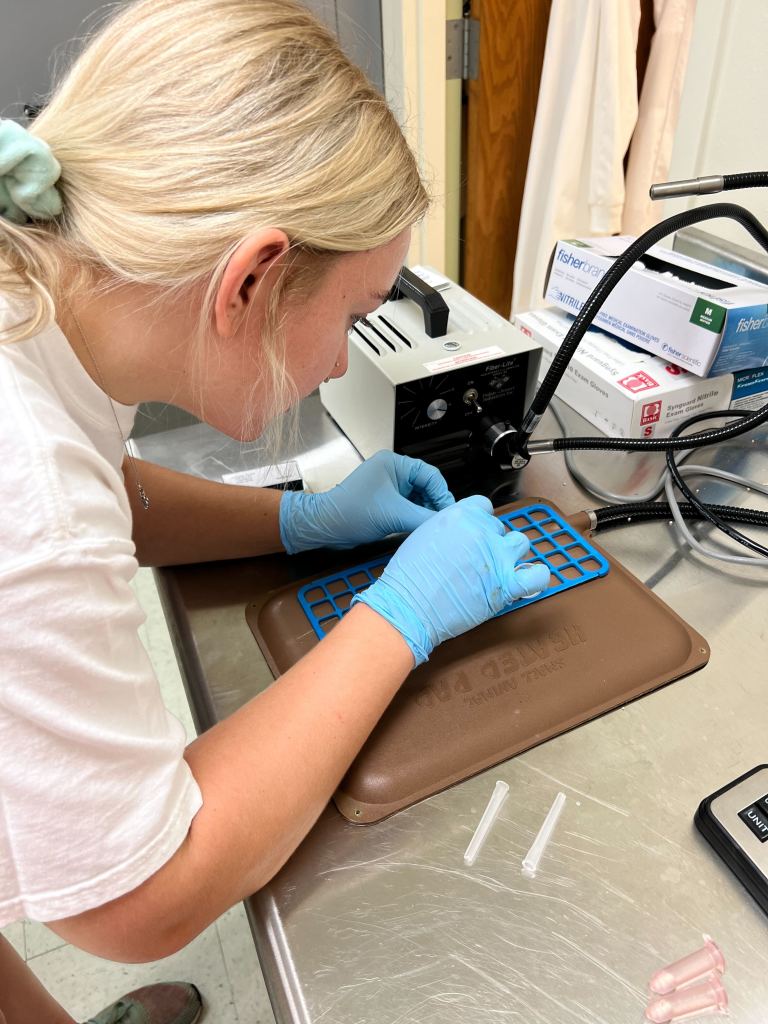
Casey working on sperm extractions

To top off the summer, we got some really great news on a few things:

  • Luberson, Amita, and Sabiha will be funded on RA for the next two years through a DEIA supplement to our current NIH R15 funding
  • Andi will also be funded through a diversity supplement on RA for the next two years
  • Exciting research collaboration starting with Dr. Guilia Bertolin in France 🇫🇷 over the next two years
  • A paper from Liz’s postdoc on naked-mole rat hearing across development came out in Proceedings B (which also features lab alumni Addi Gaut who helped with immunofluorescence experiments)
  • Liz became a part of the Weaving the Future of Animal Behavior (WFAB) program which helped fund her trip to Costa Rica and provides her with an awesome professional development cohort
  • Liz gave a webinar to the Hearing Health Foundation on Central Auditory Processing Disorder (CAPD)
  • Dr. Michael Reichert and Liz received funding for a new post baccalaureate program through NSF called ON-RaMP providing mentorship and training in biological sciences.
  • Liz traveled back to Colorado to film her recent paper on coherent anti-stokes raman scattering (CARS) for measuring myelin that has been published in JoVE

We are really looking forward to Fall 2022 since I have a feeling all our hard work this summer is going to lead to more good news in the future. Thanks everyone for all your support and of course to all the students working and playing in the lab!

Award Season

We have lots to celebrate in the lab this April! Here are some of the highlights:

Ph.D. student Jesse Hurd received an Honorable Mention for her NSF GRFP application, and even better (since the latter doesn’t actually give you the award) got the G-Rise NIH T32 fellowship which provides her with three years of stipend funding.

Not to be outdone, the undergrads are also getting recognized and funding for their research!

Margaret New received a second year of Wentz funding for her research on wild rodent hearing. She will also present her research findings from the last two years at the Wentz poster session on Friday.

Ishani Ray received the Purdie award to fund her research in the lab next year on Fragile X Syndrome and myelination.

Madeline Loosen received the Integrative Biology Dr. Raymond Dixon Scholarship in rural health in recognition for her pre-health ambitions and outstanding academic achievements.

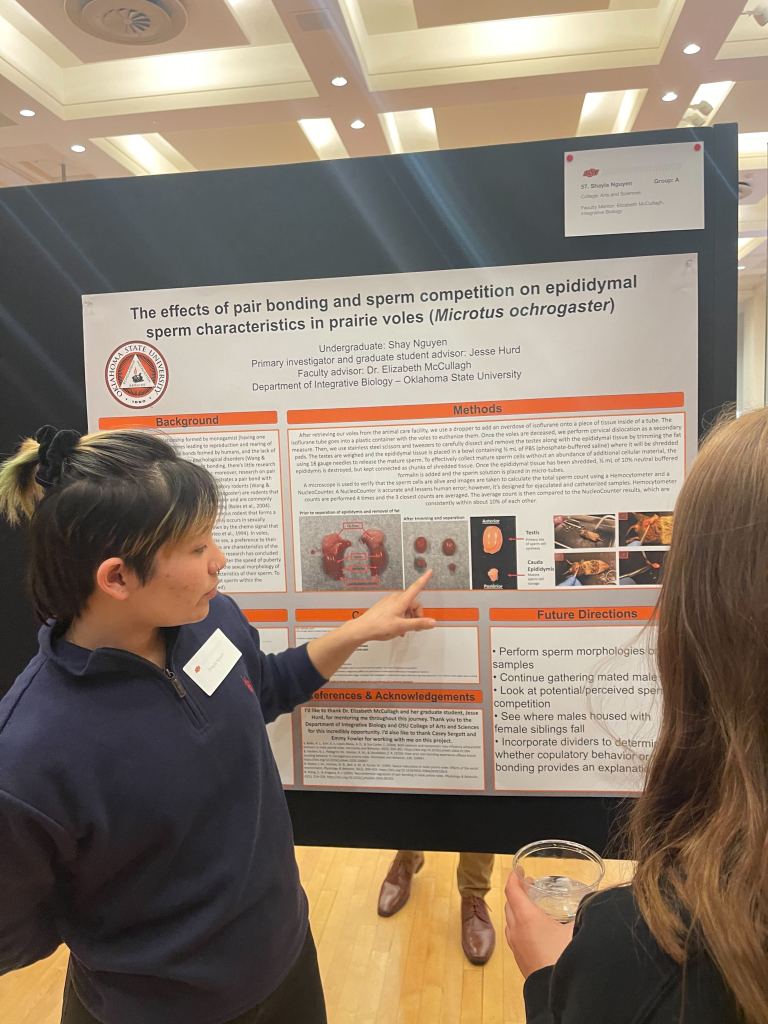
Shay Nguyen presented their work at the Freshman Research Scholar poster session last week and did a great job!

Shay presenting their work at the Freshman Research Scholar symposium.

Casey Sergott, Shay Nguyen and Emmy Fowler are going to present their work on sperm characteristics of prairie voles for both the undergraduate research symposium and Karen L Smith symposium. So grateful we have so many opportunities for undergrads to present their work!

And as it goes – what’s some good news without a few disappointments:

Dr. Reichert and I did not receive our NSF grant on tree frog auditory decision making

Sabiha and Jesse did not receive Women’s Faculty Awards

We were unsuccessful with Niblack applications for undergraduate research

As always I think it’s important to recognize the set backs with the accolades to normalize rejection and share that we don’t always get everything we apply for.

I am still pretty dang proud of everything we have accomplished and grateful for these amazing folks I can call my lab mates and mentees.