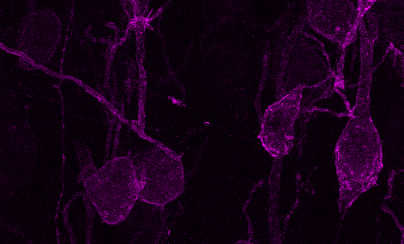
Sensory systems play an important role in integrating information from an animal’s environment to drive an appropriate behavioral response. The auditory system is one of the first sensory systems to fully develop in many animals and often shows the first signs of nervous system impairment. Processing of sound location that computes information from both ears occurs in the auditory brainstem of mammals. The early development and sensitivity to disruption of this part of the auditory system makes the auditory brainstem an ideal circuit to understand the brain in both normal and altered states.
Weird Organisms

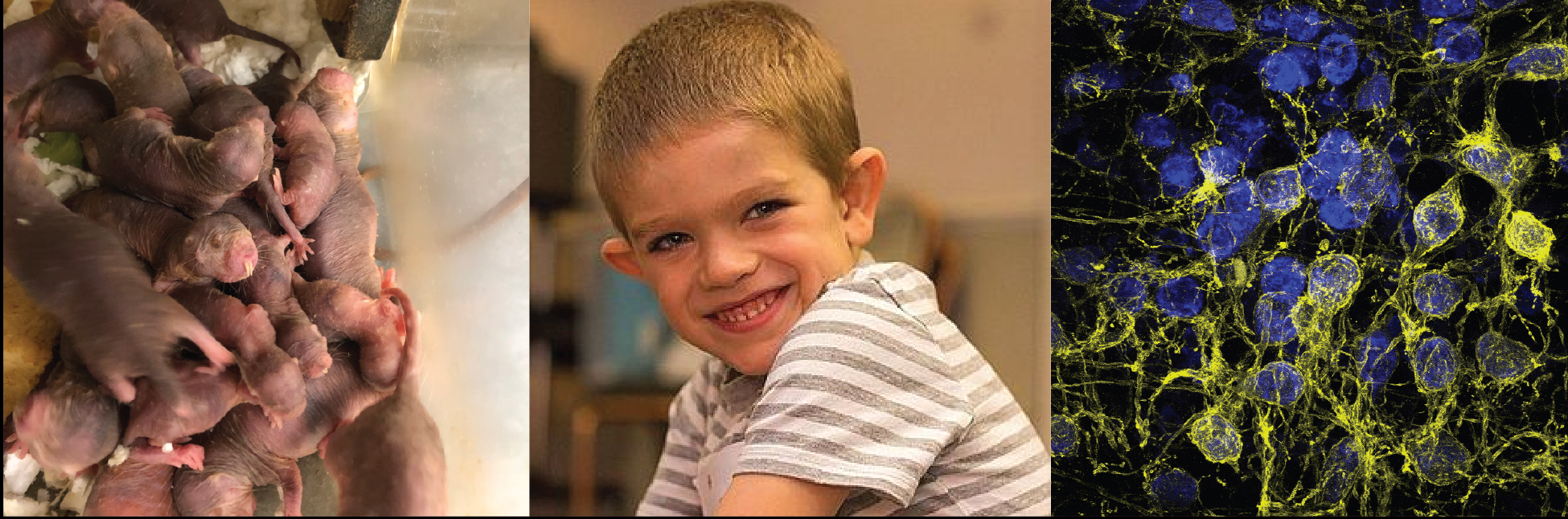
Our comparative auditory research explores how diverse and unconventional animal models navigate their acoustic environments, providing unique insights into evolution, behavior, and basic auditory physics. By studying species with specialized adaptations, we challenge and expand standard mammalian hearing models.
- Treefrog Bioacoustics: In collaboration with the Reichert Lab, we investigate the intersections of animal communication, behavior, and ecology using local treefrogs (such as the Gray Treefrog found right here in Stillwater, OK). This includes examining how ecological factors, including parasite load, alter auditory reception and behavioral responses in the field.
- Specialized Mammalian Models: Our comparative work extends to unique mammalian models. This includes evaluating the hearing abilities of alternative models, in everything from prairie voles to naked mole-rats.
Autism and Fragile X Syndrome

A core focus of our laboratory is identifying the cellular, structural, and physiological mechanisms underlying sensory hypersensitivity in neurodevelopmental disorders. We specifically look at how Fragile X Syndrome (FXS)—the most common genetic cause of autism—disrupts the precise neural circuitry responsible for binaural spatial hearing and sound localization.
- Circuit-Level Dysregulation: We examine physiological and behavioral changes across the ascending auditory pathway to discover how brainstem level processing shapes auditory phenotypes and symptoms.
- Mechanisms underlying auditory issues: We have identified myelination and mitochondrial function in the auditory brainstem as a potential mechanism underlying some auditory issues in FXS and are continuing to explore how these might drive potential therapies and understanding of the basic biology of FXS and auditory processing.
Modern Techniques
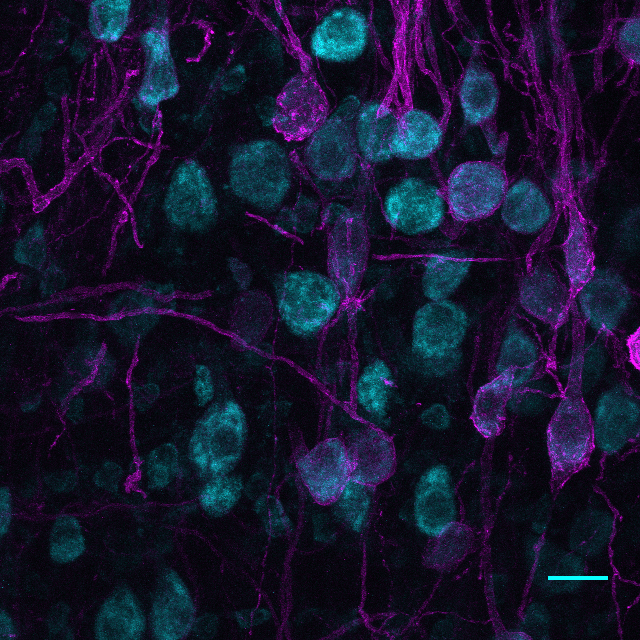
To map, record, and manipulate these complex auditory circuits with high precision, our lab utilizes a multidisciplinary suite of cutting-edge physiological, optical, and computational methodologies.
- Advanced Imaging Techniques: To evaluate critical structural anomalies without heavily altering the tissue sample, we specialize in high-resolution, label-free optical techniques and providing toolboxes for evaluating complex morphology such as dendritic spines.
- Optogenetics and Electrophysiology: We integrate viral tools (like AAVs) to express light-sensitive proteins like Halorhodopsin alongside specialized bioelectronics. This setup grants us the ability to map pathways by combining real-time template matching spike-sorting systems with direct optogenetic manipulation

