Mission/DEJI statements

Dr. Reichert and I took a lab meeting for the labs to draft some DEJI statements. I think they turned out wonderful and I am so excited to work with people who are committed to these values!

Our mission is to learn more about the natural world and help others to do the same, by being supportive of each other, active in our community, and always working to make a more inclusive science for everyone.

Our mission is to make science approachable to anyone who is interested by being open and understanding of the diversity of people (in thought, interests, background, etc.)

Our mission is to include all members regardless of background and commit to working in a diverse setting. All groups should have an equal opportunity to learn and bring forward meaningful science. 

Our mission is to foster scientific opportunity within and outside academia through inclusion, equal representation, and accessibility. 

Our mission is to create an accessible and inclusive lab environment by valuing members’ varying backgrounds, experiences, and opinions.

Our mission is to cultivate scientific thinking and research for a better good beyond and to inculcate these ideas beyond cultural and linguistic boundaries 

Our mission is to perform robust scientific research by encouraging people of diverse opinions, perspectives, and cultural backgrounds to bring their whole identities to the lab.

International Day of Women and Girls in Science

I love that there is a day to recognize women and girls in science. However, there is still so much to be done to increase access and acceptance of all people in the sciences. I had the opportunity to talk with Capucine Paquay about barriers to STEM fields and some advice for folks with Director of Outreach Nicole Williams from 500 Women Scientists. Check out the article here:

Women in Science: Towards an Inclusive Future?

Girl writing on a piece of paper for a backyard nature scavenger hunt

Let’s celebrate, and recognize how far we’ve come, but not lose sight of how far we still have to go. To all the current and future scientists out there, we see you and we are fighting for your future.

Lab comings and goings

First off, big congratulations 🎊 🎈 🎉 to graduating seniors Patrick Crotty and Addi Gaut!!!

Patrick was in the lab for the semester and was super helpful working with Amita to do some immunohistochemistry. He is off to medical school next year (wherever he decided to go will be lucky to have him). It was wonderful to get to know you as both my student in Principles of Neuroscience and in the lab!

Addi will be sorely missed! She is starting at University of Tulsa Law School in January and I couldn’t be more proud! Addi joined the lab as a junior and quickly took over all of the anatomical experiments. Not only was she a quick learner and independent, but she was able to bring a new technique into the lab and then teach me (RNAscope). There are several publications that will be coming out of the work she put into her time at OSU, so stay tuned. I’m not sure what we will do without her, but I know she is going to be a wonderful lawyer.

Rachael Brodsky (M.S. student) is also off to pursue new interests. She is leaving us to go to school for social work at OU. Rachael is one of the most compassionate and thoughtful people I know and I am sure she is going to thrive in her new program.

Other Updates

Undergrads Gabby Byus and Elizabeth Farmer presented their work with frogs 🐸 at the Karen L Smith Symposium hosted by the Integrative Biology Department. Both did an amazing job, and Elizabeth tied for first place for her presentation!

We had the wonderful update that former Team Frog 🐸 undergrad Molly Hood has been accepted into dental school at OU – also super proud and couldn’t be happier for her!

Lastly we had our first lab holiday party! It was really nice to wind down the semester with folks and eat, drink (sparkling cider), and be merry!

Lab updates!

It has been a whirlwind of a past few months! Here are a few quick highlights of what is going on in the lab!

People!

  1. New members joining! We have several new PhD graduate students that started this summer, Luberson Joseph and Sabiha Alam. We have our newest MS quickly-turned PhD student Jesse Hurd that joined this Fall. Welcome!
  2. New undergrads joining! Lots of new undergrads joining the lab including Madeline Loosen, Gabby Byus, Elizabeth Farmer, Casey Sergott, Patrick Crotty, and Melissa Sullivan.
  3. Welcome back to returning undergrads, Addi Gaut, Ishani Ray, Adam Ramirez, Margaret New, and Kaitlyn Welker and of course M.S. student Rachael Brodsky and Ph.D. student Amita Chawla.

*check out more info about everyone here.

Papers!

  1. In collaboration with members of 500 Women Scientists, we evaluated the gage. platform. Our results were published in September in FACETS: https://www.facetsjournal.com/doi/full/10.1139/facets-2021-0033
  2. Manuscript submitted examining myelination deficits in the brainstem of Fragile X Syndrome mice. This is work that is the basis for a new NIH NICHD R15 award (see below!). Much of this work was generated by awesome technicians Shani Poleg and Alexandra Lucas while I was a postdoc in Achim Klug’s lab. Check it out on BioRxiv: https://www.biorxiv.org/content/10.1101/2021.09.08.459530v1
  3. First manuscript from the lab submitted for review! This manuscript characterizing the hearing ability of a social rodent, the monogamous prairie vole. Margaret New collected some of this data with lots of help to set up our system from Dr. Tim Lei and Ben-Zheng Li. Check it out on BioRxiv: https://www.biorxiv.org/content/10.1101/2021.10.07.463519v1

Funding!

We got our first major grant as a new lab! Thanks to funding from the National Institutes of Health NICHD R15 AREA mechanism we now have funding to pursue the myelination project for which our first publication is under review right now – see above. For some more info check out this blurb on the Department of Integrative Biology’s website: https://integrativebiology.okstate.edu/news/533-mccullagh-lab-receives-nih-grant

Logo for the National Institutes of Health NICHD institute

Impossible Choices for Caretakers at Academic Institutions

So, I (Liz McCullagh), along with my 2 year old, got COVID two weeks ago right before the start of the semester. I got COVID right as I was helping to write a piece with 500 Women Scientists about the impossible choices caretakers are having to take right now without vaccine protection for our little ones and increasing COVID cases across the country due to the Delta variant – https://www.scientificamerican.com/article/academic-institutions-must-do-better-to-protect-caregivers-this-fall/

I am still playing catch up from having to move my class online for the first two sessions. Thank goodness my symptoms were super mild (as were the 2 year olds – thanks vaccines and breastfeeding!). Thanks everyone for their patience over the last two weeks and over the next ???. Things don’t have to be this way – but we aren’t doing enough to support our academic communities.

Undergraduate Lab Experiences

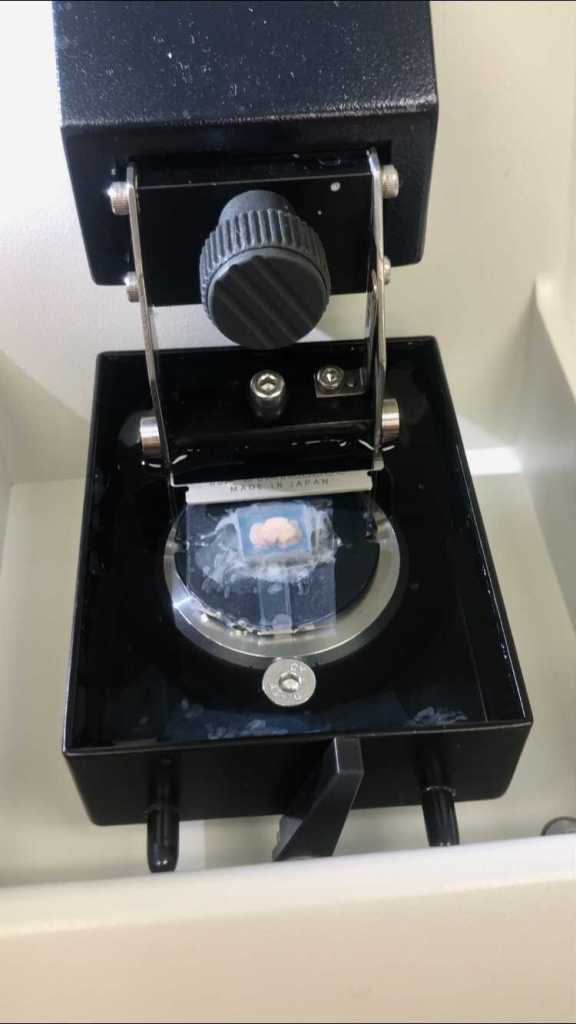
I had the privilege to participate in research concerning frog brain anatomy and frog ABR during my senior year in Dr. McCullagh’s lab. Reaching out to my other co-mentor, Dr. Jodie Wiggins, during the summer of 2020 to ask if any research teams were available for me to join was one of the best decisions I made throughout all of my college years! In Dr. McCullagh’s lab, I joined Team Frog and was able to collaborate with and learn from graduate students. My duties in the lab consisted of slicing frog brains and staining them to try to identify key structures we believe to be associated with the binaural response frogs have to sound processing, and assisting with ABR recordings. My favorite part of my research was learning how to slice brains on the sliding microtome, because it is a hands-on technique that produces beautifully thin-sliced sections. Second to that, I had the opportunity to present our lab’s work at the Karen L. Smith undergraduate research symposium, which was a fulfilling way to end the year’s research. I will truly miss participating in the lab’s work, and the graduate and undergraduate students I met along the way. Dr. McCullagh has been a wonderful mentor and has helped to develop my appreciation of science and its process, and has provided me with a space to apply new lab techniques I had not anticipated I could excel in! (Molly Hood)

I joined Dr. McCullagh’s lab in 2020, during my junior year at Oklahoma State. I had never done research before, so I wasn’t totally sure what I was getting myself into. Been a science major allowed me to have experience in a lab setting, but to be honest I hadn’t loved most of the lab classes I’d taken. I think this was probably due to the fact that in many lab classes it feels like you get very little explanation of how to do procedures or experiments correctly, why you’re doing a particular experiment, and that you can’t make any mistakes because they will affect your grade. Fortunately, in Dr. McCullagh’s lab the experience is completely opposite. I’m actively engaged in research, not just trying to hit certain checkpoints so that I can turn in an assignment, get a grade, and move on.

I’m a part of Team Mouse, and specifically throughout the last year I have been working on a project concerning Mus spicilegus mice. I deal with the anatomy of their brains, which means slicing, staining, and analyzing them. Throughout the past year I feel like I’ve gotten to put the knowledge I’ve learned in classes to practical use. I’ve learned about antibodies and hormones multiple times over the years, but through actually understanding their practical implications in the brain and using them to stain areas of interest I have a much deeper understanding of them. I’ve also gained skills such as using a vibratome, staining techniques, and using software to measure areas of the brain that I wouldn’t have learned in my classes or labs. I feel like I can ask questions and make mistakes without fear of repercussions, and I actually have a desire to learn about what I’m doing, not just to get through it for the sake of getting a grade. Participating in research is an experience that I wouldn’t get anywhere else in college, and I can’t wait to see what the next 6 months before I graduate hold! (Addi Gaut)

Here’s to your future!

It’s always bittersweet when students graduate or leave. I am so thankful for all of the contributions they have brought to the lab, including helping me set everything up and helping me learn to be a mentor.

This year brings a particularly large cohort of students who are graduating – here is some a tidbit of the projects that they worked on:

Team Frog 🐸

Molly Hood – co-advised with Dr. Jodie Wiggins

Molly hopes to go to dental school, and I have no doubt that she will get there! Molly had the daunting task of getting some of the anatomy on frogs going in the lab. She was certainly up for the challenge and learned brain slicing (on two different types of vibratomes), immunofluorescence, H & E staining, as well as a source of constant support to her fellow Team Frog cohort. She recently presented their work at the Karen L. Smith undergraduate research symposium.

Kanece Ham

Kanece just recently joined the lab, we wish we had found each other sooner! She may stick around for the summer and continue to help out with Team Frog, which we are very much looking forward to. Happy Graduation!

Courtney Byrd

Courtney has been a wonderful addition to my lab. I was so happy when she interviewed and wanted to join Dr. Michael Reichert’s lab. She has such great insight for experiments and endless ideas of future directions for work. It is clear she is also passionate about teaching, have received the Departmental M.S. Teaching Award in her first year as a graduate student. Your future students are lucky to have you and I know you are going to excel as a K-12 teacher.

Team Microscope 🔬

Alex Blackwell (OK-LSAMP)

Alex was one of the first students in my lab, and I could not be more grateful to have her working with me! Between analyzing auditory brainstem data, learning to use the epifluorescent microscope to take images, and train others in the lab, she has been a great resource. We wish you the best of luck for your senior year closer to your family.

Prekshika Patel

While Prekshika joined the lab recently, she jumped right in with both feet! She has been instrumental in keeping up with the microscope imaging that Addi and Jordyn keep pumping out. Thank you!

Team Wild Rodent 🐁

Jordyn Sisovsky

I had the pleasure of teaching Jordyn in Spring 2020 for my Behavioral Neuroendocrinology class, and I am so glad she reached out to join the lab last Fall. She has learned both auditory brainstem physiology and anatomical methods with apparent ease. Always fearless when we are out collecting wild rodents and working with animals in whatever capacity, we are surely going to miss your skills! We hope you can stick around some this summer and continue working in the lab in your spare time.

Team Mouse 🐭 (Mus spicilegus)

Bailey Hinshaw (Honors Student)

Bailey was the first student to reach out to me about research opportunities (before I even joined as faculty at OSU!). She is a constant presence in the lab and quickly took on and lead her independent Honors thesis project. In addition to being a great scientist, Bailey has been a rock for the lab and her lab mates. She is always available to help out whenever needed and happy to take on any challenge that comes her way. She is going to be an excellent doctor and I wish you the best in medical school!

Allison Lawrence

Allison was a student of mine in Fall 2020 Principles of Neuroscience. She has been super helpful in doing the dirty work of the lab including helping me renovate the animal space in preparation for the arrival of my mice. We are hoping she will be around this summer to continue with analysis help and wish her best of luck in her dreams to be a veterinarian.
Margaret S. Ewing Outstanding Mentor Award

I am beyond honored to be awarded the Margaret S. Ewing Outstanding Mentor Award by the Zoology Graduate Student Society (ZoGSS). Here are the lovely things they had to say:

Finally, the Margaret S. Ewing Outstanding Mentor Award goes to a faculty or staff member who has dedicated excellence involved with mentoring students. This year’s recipient joined OSU in January 2020 and is already a mentor to 13 undergraduate students, two Master’s students, and one PhD student with two additional graduate students joining this summer. She is dedicated to building a research lab that is both diverse and inclusive by creating spaces which allow students to bring who they are to every aspect of their work. She is also serves as a faculty mentor on the OSU branch of Out in STEM, a non-profit national organization that empowers LGBTQ+ people to succeed personally and professionally in STEM. She is also a strong advocate for women in STEM, as she was one of the founding members of 500 Women Scientists, a non-profit organization that is dedicated to making science open, inclusive, and accessible by fighting racism, the patriarchy, and oppressive societal norms that women and nonbinary people often face in STEM. Additionally, she spearheaded the Expanding Your Horizons (EYH) conference, which is a weekend-long symposium designed to introduce middle-school girls to engaging careers in STEM and in the process builds a supportive community of young women scientists as they continue their STEM engagement. ZoGSS is pleased to present this award to Dr. Elizabeth McCullagh!

Here is some info about the amazing woman after which the award is named: “Dr. Margaret S. Ewing received an M.S. in 1964 and a Ph.D. in 1966, both in Zoology from Oklahoma State University. In her distinguished career in Zoology, she has published numerous peer-reviewed manuscripts and coauthored two books.  Dr. Ewing has received noteworthy awards for teaching and other scholarly work, including the AMOCO Foundation Outstanding Teaching Award, the OSU Regents Distinguished Teaching Award, the American Fisheries Society Distinguished Service Award, and the Burlington Northern Foundation Faculty Achievement Award, among others. The Zoology Graduate Student Society named their outstanding mentor award for her. Moreover, she has contributed to the Women’s Studies Program and has brought into the light issues related to support for women in science. Dr. Ewing was the first woman promoted to full professor in the Department of Zoology at OSU.” From https://integrativebiology.okstate.edu/news/integrative-biology-news/12-recent-news/68-margaret-s-ewing-endowed-distinguished-lectureship-established

Frog auditory brainstem responses

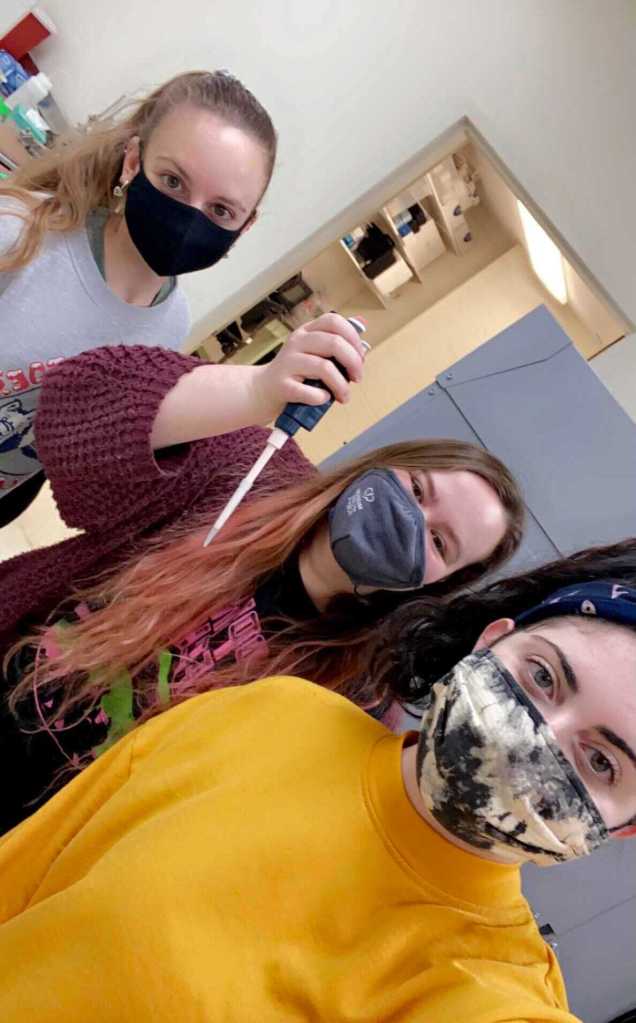
Getting research to work! Members of the lab getting data.

The auditory brainstem response (ABR) is a neural (brain 🧠) signal that is generated by an area of the brain that processes sound location information. The McCullagh lab is relatively new to working with frogs 🐸, setting up a new system for neural recordings, and are in the middle of a pandemic 😷. SO it was with great pleasure that we celebrate some wins when things actually work! We were able to get some (really great) recordings today using our set up and it was all run by two masters students in the lab Rachael Brodsky and Courtney Byrd (co-advised with Dr. Michael Reichert (https://reichertlab.com/, @FrogListener)). We would not have been able to get the recordings (or it certainly would have taken a lot longer) without the help of a Zoom call from experts Dr. Megan Gall and Dr. Mark Bee. Thank you both for helping out with the fix!! Stay tuned for some really cool data from Rachael Brodsky’s masters thesis in collaboration with Dr. Matt Bolek.

Cheers 🥂 to science!