Trying to catch some wild rodents

Live trap with bait

We got up early this morning (got to the site at 7:30, which is dawn right now!?) to try and catch some wild rodents. We are interested in how different rodent and insectivore species process sound location information. We were hoping to catch some beasties to measure vocalizations, their auditory brainstem responses, and look at some anatomical markers in the brainstem. The auditory brainstem response is a neurophysiological output of the key areas of the brain responsible for understanding where a sound is coming from. We can use this response to understand variability in hearing range (frequency), binaural (both ear) hearing, sex differences in hearing, and any hearing loss animals might have. Different species that we find can provide us more information about the diversity of factors that influence the ability to process where sounds originate.

Today we weren’t able to catch anything, but we are hoping, now that we have the tools to try, we can get this data very soon!!

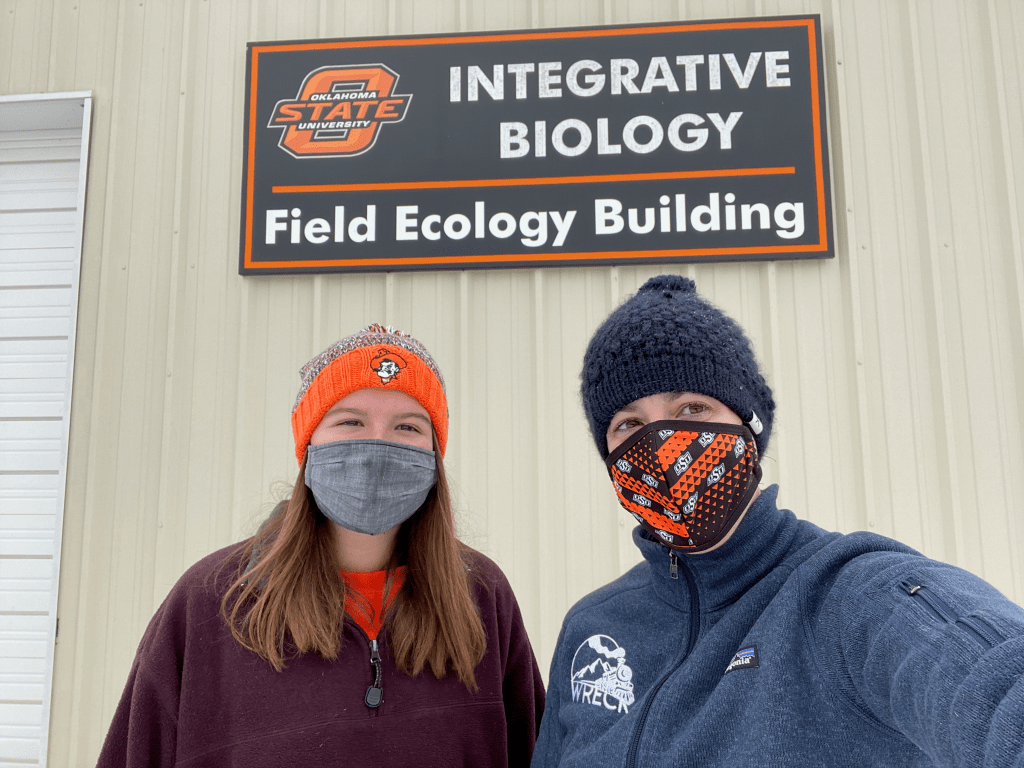
Exciting things coming soon from Team Wild Rodent! Big props to undergrad and Freshman Research Scholar Margaret New for driving up from Edmond bright and early to set some traps with me and Dr. Scott McMurry for providing us the traps and the know-how.

Seeking students!

The McCullagh Lab needs more masters and PhD students!

Graduate positions available (masters and PhD) in new faculty’s lab in the Integrative Biology Department at Oklahoma State University.
*Funding available through TAships and summer funding provided through start up until grant funding is obtained.
*Research conducted in the lab focuses on Neuroscience and specifically sound localization processing in the brain of vertebrates. More narrowly, projects available exploring auditory hypersensitivity/binaural hearing in autism spectrum disorder and Fragile X Syndrome, comparative Biology of rodent and amphibian species.
*Techniques the lab uses include: anatomy/histology, in vivo physiology, behavior, data analytics, optogenetics, viral tracing, knock out mouse strains/genetic mouse strains.

Women and underrepresented minorities are strongly encouraged to apply.

*Preferred skills for applicants:

  1. willingness to learn and motivation to work hard (while keeping work/life balance and mental health),
  2. coding experience (R, Python, Matlab),
  3. wet lab/field experience, strong letters of reference

If based in the US could potentially start in Spring 2021. Else start date would likely be summer 2021/Fall 2021.

Funding is around 23K (not including summer funding). Summer support is available for at least one summer (possibly two, for a total of almost 31K of annual support). Hopefully research assistant support will become available with future grant funding. Applicants will be strongly encouraged to apply for extramural funding (with support from Dr. McCullagh) to support their careers.

Sound Attenuation Capable!

We finally have a small sound attenuating chamber here in the lab! You may be asking, what in the heck is that thing and why is it helpful to your research?

The lab’s research centers around measuring brain responses to auditory stimuli. In order to measure auditory responses accurately, we need to place animals in a space that reduces sounds that are coming from the environment. This ensures that the recordings we make are only from sounds we introduce to the animal. With a chamber of this size, we can measure auditory brainstem responses (ABRs) which are signals we can get from electrodes placed on the scalp (or just under the skin) of animal to record impulses from areas of the brain responsible for the ability to localize sound sources. Additionally, we can put electrodes in the brain of animals while playing sound and record directly from auditory regions.

What types of things are we hoping to learn? Some of the projects in the lab that use these techniques are:

-Recording from frogs and toads that live in different environments (terrestrial, aquatic, burrowing) to see if these environments impact the brain’s encoding of sound location information.

-Measuring responses from mice with mutations that lead to autistic behaviors, such as Fragile X Syndrome, to see how their sound localization pathways are impacted.

-Working with Dr. Michael Reichert (https://reichertlab.com/) to determine if sensitivity to different auditory stimuli in Grey Treefrogs is seasonally or hormonally dependent.

-Measuring the brains of other cool animals (naked mole rats, prairie dogs, etc.) to determine how they process sound information that may lead to insights into how the brain works and what specializations different species have in this auditory pathway.

Stay tuned for more lab updates and hopefully publications etc. related to this work!

*Video below shows a recording from the brain of an anesthetized gerbil. Sound you hear is the neuron firing in tune with a low frequency sound we are playing the gerbil. You can see as I unplug sound to one ear, the firing stops and that as I change the frequency of the sound I am playing to the gerbil, the firing (the squiggly lines on the recording) go away. This suggests the neuron I am recording from is both frequency and sensitive to sound played only to one ear.

https://www.dropbox.com/s/wtry8acgwqz6fif/MNTB%20recording%20flipped.mp4?dl=0

An open letter to my current and future students.

Hi everyone,   I have been thinking for a while about the best way to use my words and power as a faculty member at Oklahoma State University. 


My job description as I know it, involves three aspects: 1. Research, 2. Teaching, 3. Service. Across all of these areas, I also need to be a mentor to you all. As a mentor, I take my job very seriously, and I want to offer to you the best of myself, my knowledge, and skills. To that end, I know that academia and science has not always served each of us, and our experiences getting into science are going to be very different based on a lot of factors. 


Here is my commitment to you across each of those areas above:

Research:

I hope to build a lab that is not only diverse, but also inclusive. Many studies have shown that we all do better science when diverse voices are included. What is often neglected is that in order to include diverse voices equally, we need inclusion. To me, inclusion means having a space where you can share your ideas freely without fear and can bring WHO YOU ARE right now to every aspect of your work. Science is about learning from mistakes, we all make them and we learn and grow from each of them. Do not be afraid to fail. Negative data is always interesting and we gain knowledge from everything that we do, failures and successes. 


Teaching:

As a teacher, my goal is for you to learn. Learning looks different for every individual. While it may be difficult, I am committed to teaching you in many different ways to help you gain knowledge. I will give you hands-on projects, written materials, reading assignments, writing projects, teaching opportunities, and opportunities to listen. If you don’t understand something in one format I have presented to you, I am happy to present it in a different way. You may not get everything I am trying to teach you in one of the above formats. That is okay. One of the other formats may resonate more with you, or it may take the third, fourth, or more times hearing something to get it. That is normal. I am open to feedback.


Service:

I am passionate about many different things. I assume you have passions outside of research as well. That is awesome. Use those things that you are passionate about to take a break from science as needed (or if you can incorporate it into your science!). Personally, I am passionate about social justice, equity, inclusion, and diversity efforts. I want to change what a scientist looks like. I want to be on the front lines of a fight against the patriarchy, racism, sexism, and anything else that stands in the way of a world where we can all be free and live. I hope that you will join me. 


I am listening. I am learning. I am not perfect. I am committed to growing and trying to be a little bit better every day. I am committed to you.
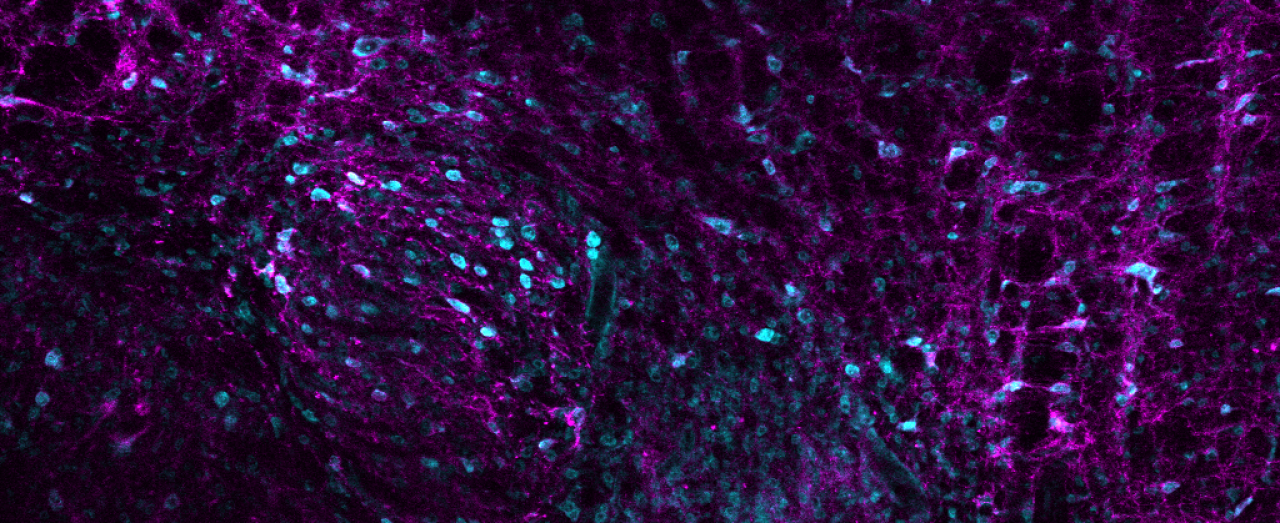
eNeuro paper out!

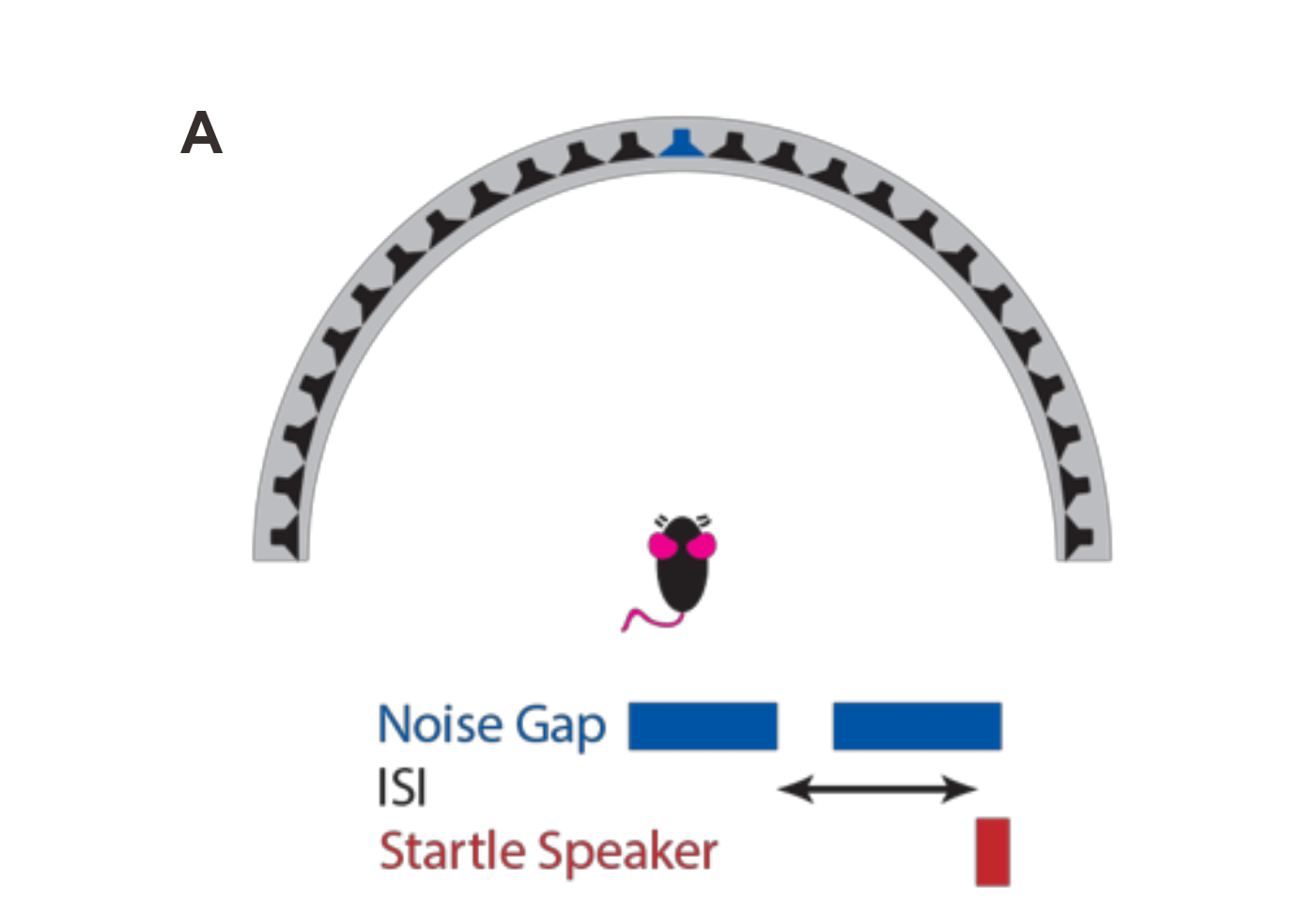
Figure 2


Check out our latest work on spatial hearing ability of mice with a genetic form of autism spectrum disorder (Fragile X Syndrome).

https://www.eneuro.org/content/7/1/ENEURO.0300-19.2019.abstract

Summary: FXS mice startle to loud sounds like control mice, but maybe have some subtle changes in their ability to localize sound sources, whether it be a gap in noise, change in speaker location, or a signal from a noisy background. In addition, they seem to take longer to respond than control mice.

Request a Woman in STEMM revamp launched!

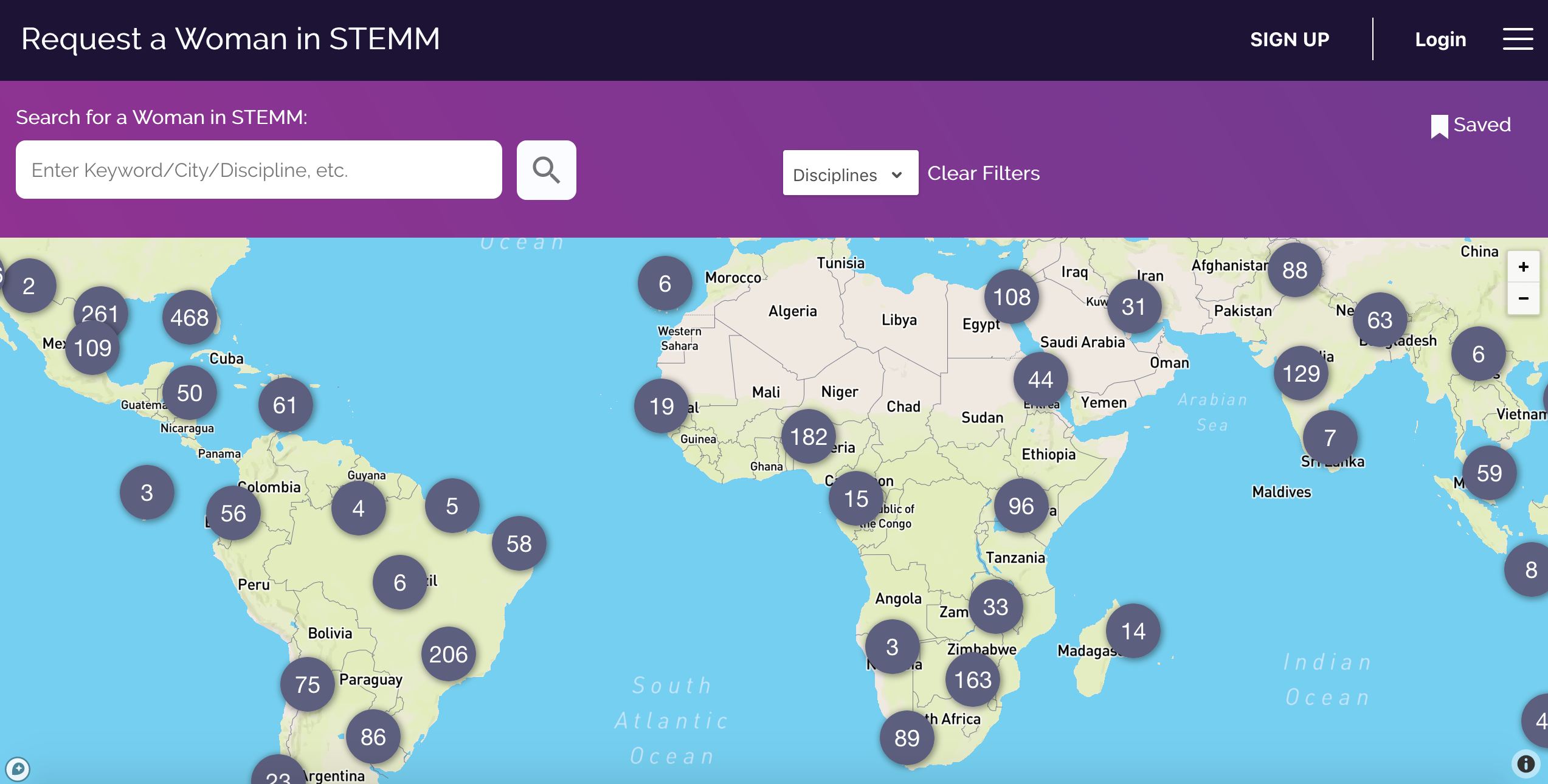
Screen Shot 2020-01-20 at 9.11.22 AM500 Women Scientists is excited to announce the launch of its new and improved “Request a woman in STEMM*” platform. Based on feedback from users and database members, the new database sports an improved UI experience, individualized profiles, and improved capabilities. Developer Critigen has designed and implemented a much more accessible and usable platform that will help find women experts across scientific fields and change perceptions of what a scientist looks like. 

500 Women Scientists’ central mission is to serve society by making science open, inclusive, and accessible through the transformative leadership of women in *science, technology, engineering, mathematics, and medicine (STEMM) fields. To meet that mission requires changing the face of what a scientist looks like. 500 Women Scientists has leveraged a network of over 300 Pods (or local chapters) around the world to increase representation of women in STEMM through a number of locally-driven initiatives.

Two years ago, 500 Women Scientists launched the “Request a Woman Scientist” platform. Tired of constantly seeing the same faces, mostly white men, representing science in the public sphere, the platform was developed to provide opportunities for members of the media, scientific colleagues, conference organizers, educators, and others to find and include more women and underrepresented identities. In the past two years, the platform has grown globally to include more than 12,000 individuals from over 140 countries and territories. The new and improved platform features more information about platform participants, individualized profiles, improved searchability, ability to save profiles, and many other updated features. As a part of the new platform, 500 Women Scientists hired Concolor Research to assess the platform’s reach and impact. With generous support from the Simon’s Foundation Science Sandbox and Lyda Hill Philanthropies, 500 Women Scientists worked with the development team Critigen to update and revamp the platform, making it more accessible. There is truly no excuse for not including women scientists’s voices in the public science discourse.  

Come join my new lab! Recruiting masters and PhD students

IB_OSU

M.S. AND PH.D DEGREE OPPORTUNITIES IN INTEGRATIVE BIOLOGY. The Department of Integrative Biology at Oklahoma State University is recruiting graduate students for Fall 2020 admission to join a collaborative and productive degree program. The Department of Integrative Biology takes an integrative approach to research in organismal biology, focusing on increasing our knowledge of organisms and their environments through studies ranging from the molecular to the ecosystem level. We have three inclusive areas of study: evolution, ecology, and environmental stress, which we define quite broadly. Among other areas, we conduct studies in conservation ecology, genomics, neurobiology, behavioral ecology, environmental toxicology, science education, ecosystem studies, and physiology. Graduate Teaching Assistantships with competitive stipends are regularly available.

Oklahoma State University is located in Stillwater, a thriving college community with a low cost of living, diverse restaurants, a thriving music scene, air service through American Airlines, and close proximity to both natural and major metropolitan (Tulsa and Oklahoma City) areas.

Information on applying to our graduate program can be found here: http://integrativebiology.okstate.edu/graduate-program/admission-procedure. For questions regarding the application process, please contact our departmental Graduate Coordinator, Dr. Jen Grindstaff (jen.grindstaff@okstate.edu). The application deadline is February 1, 2020.  Evaluation will continue after that date, but students are encouraged to apply as early as possible.

Come join the McCullagh Lab, starting January 2020! Masters and PhD students welcome! Postdocs may be recruited based on availability of funding. The McCullagh lab is interested in understanding how the brain uses sound information provided by the ears to determine the location of a sound. We investigate this question using several different strategies:

  1. Studying different model organisms to see how they use the brain to localize sound. (Examples: Naked Mole Rats, Frogs, Horses, etc.)
  2. Using disease models that are known to have difficulties with sensory information (Examples: autism and Fragile X Syndrome)
  3. Use modern techniques to manipulate the brain and see what happens to sound information processing (Examples: optogenetics, etc.)


*For more information or to express interest contact elizabeth.mccullagh@okstate.edu


Cover of CU Medicine Today

IMG_2072

I made the cover of CU Medicine today for my work on the Request a Woman in STEMM platform. Excited to talk about all of my various side projects including the platform to end #manels, Northern Colorado Expanding your Horizons, #SciMomJourney, and Milk and Cookies. Check out the article here:

https://medschool.cuanschutz.edu/deans-office/cu-med-today/features/features-fall-2019/database-for-inclusive-scientific-panels-keeps-growing?fbclid=IwAR3Z7yJ-TlpIND6dKOlVgGb74KufXKn2YNeom8-HLU-4kUPSt7QZlmB1JxM

Press for Request a Woman Scientist platform

https://www.dw.com/en/making-space-for-female-scientists-voices-online-in-the-media-and-in-person/a-49258608

How Do You Solve the ‘Manel’ Problem for Scientific Meetings?

https://science.sciencemag.org/content/364/6444/twil

In Bid to Include More Women, ‘Request a Woman Scientist’ Has Recruited 10,000 Researchers

https://www.nature.com/articles/d41586-019-01500-3

https://www.bizjournals.com/bizwomen/news/latest-news/2019/05/database-debunks-science-thats-stale-pale-and-male.html?page=all

https://www.natureasia.com/en/nmiddleeast/article/10.1038/nmiddleeast.2019.68

https://www.natureasia.com/en/nmiddleeast/article/10.1038/nmiddleeast.2019.69

https://www.laboratoryequipment.com/article/2019/05/diversifying-face-research-global-database-women-scientists

https://www.goodmorningamerica.com/living/story/female-scientists-start-database-showcase-work-9000-women-62781410

https://www.timeshighereducation.com/news/global-database-aims-improve-visibility-female-scientists

https://www.elnuevodiario.com.ni/actualidad/490690-mujeres-ciencia-inclusion-laboral-igualdad/

UNAS 7.500 MUJERES SE UNEN A LISTA PARA AMPLIAR PRESENCIA FEMENINA EN CIENCIA

https://www.deutschlandfunknova.de/nachrichten/datenbank-forscherinnen-finden-leicht-gemacht

https://www.dossierpolitico.com/vernoticias.php?artid=218045&relacion=dossierpolitico&categoria=459

Unas 7 mil 500 mujeres se unen a “Request a Woman Scientist” para aumentar la presencia de científicas

https://www.kunc.org/post/group-aims-change-face-science-starting-database-women-scientists

https://www.va.se/nyheter/2019/04/24/hon-tog-saken-i-egna-hander-for-att-synliggora-kvinnliga-forskare—nu-har-hennes-initiativ-fatt-resultat/

Click to access 310.full.pdf

https://www.labmanager.com/news/2019/04/international-database-of-women-scientists-created#.XMHqaRZMGEc

https://www.beckershospitalreview.com/hospital-management-administration/enrollment-in-database-of-female-scientists-soars-spurs-similar-tool-for-women-in-medicine.html

https://www.cuanschutztoday.org/cu-school-of-medicine-scientist-helps-create-international-database-of-women-scientists/

https://www.bostonglobe.com/metro/2019/04/24/hundreds-massachusetts-women-scientists-have-joined-global-database-experts-change-face-science/J9Y6LLhUVnvT0q8m46Xn1H/story.html#comments

https://www.agenciasinc.es/Noticias/Una-base-de-datos-mundial-para-dar-voz-a-las-mujeres-cientificas

https://www.google.com/amp/s/www.inverse.com/amp/article/55183-500-women-scientists-experts

‘This is the tip of the iceberg’: More than 8,500 women have joined the 500 Women Scientists database

https://www.sciencedaily.com/releases/2019/04/190423145517.htm

https://www.the-scientist.com/news-opinion/more-than-8000-have-joined-request-a-woman-scientist-database-65791

Request a Woman Scientist for conferences, classrooms, and more [Women’s History Month]

http://www.cronica.com.mx/notas/2019/1117178.html